Focus on the manufacturing and export of functional sofas
-
 +86 18257273741
-
 [email protected]

 English
 Español
Industry News

What Is a Swivel Lift Chair? Features, Benefits, and Buying Guide
 2026.08.05
 Industry News
Content
- 1 What Is a Swivel Lift Chair and What Core Problem Does It Solve?
- 2 Lift Chair Recliner Functions: The Anatomy of Movement
- 3 Electric Lift Chair Features That Determine Comfort and Safety
- 4 Swivel Recliner Chair Benefits for Mobility and Daily Living
- 5 Power Recliner Chair Applications Across Home and Care Settings
- 6 Selecting a Swivel Lift Chair: Factors to Evaluate
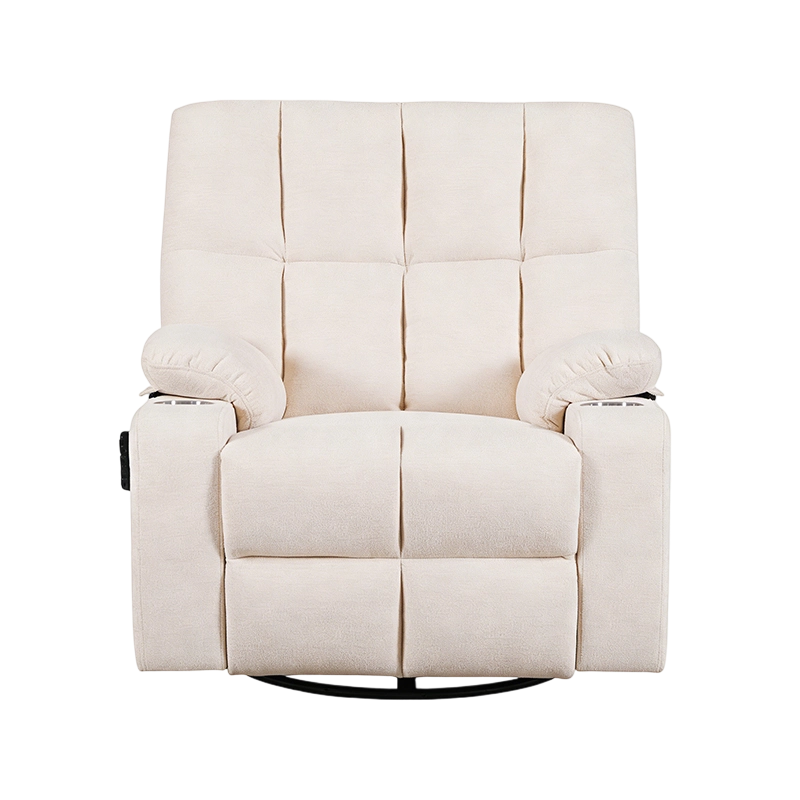
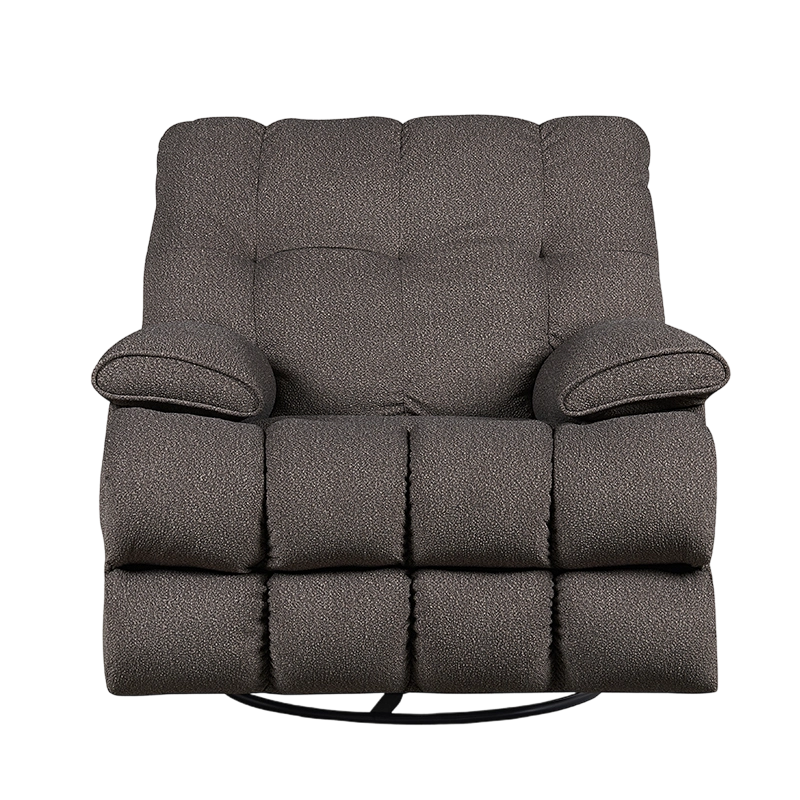
A swivel lift chair is a powered recliner that combines a motorized lifting mechanism with a rotating base, helping users stand up and sit down safely while also allowing them to turn without twisting their body. Unlike a standard lift chair that tilts forward and up in a straight line, the swivel function enables the entire chair to rotate, usually through a range of 90 to 360 degrees, so the user can face a doorway, a dining table, or a television without straining. For individuals with limited mobility, arthritis, or post-surgical recovery needs, this dual capability addresses two of the most challenging daily movements—rising from a seated position and pivoting to change direction—within a single piece of furniture. As the global population ages, the demand for power lift recliner chairs has grown steadily, and the swivel variant has become a preferred solution for those who want to maintain independence at home while reducing the risk of falls during transfers.
What Is a Swivel Lift Chair and What Core Problem Does It Solve?
At its most functional, a swivel lift chair is an electric lift chair with a rotating base plate integrated between the chair frame and the floor. When the user activates the lift function via a hand-held remote, a linear actuator pushes the chair upward and forward, bringing the seat to an angle that naturally transfers the user's center of gravity over their feet. In a standard lift chair, the user must then stand and manually turn their body if they want to face a different direction—a movement that can cause dizziness or loss of balance. The swivel mechanism eliminates that twisting motion: once standing, the user can rotate the chair to the desired orientation before sitting back down, or they can swivel the chair while seated to face a new direction without rising. This combination makes it particularly valuable as a lift chair for elderly individuals who may have hip or knee replacements, where rotational stress on the joints must be minimized.
The integration of the swivel function into a recliner chair with lift function means the user does not have to choose between therapeutic recline positions and safe transfers. During the day, the chair operates as a comfortable recliner with multiple positions—often including an infinite position that allows the backrest and footrest to be adjusted independently. When it is time to get up, the same hand control activates the lift, and the swivel allows the chair to turn smoothly toward a walker, a caregiver, or a doorway. This consolidated functionality reduces the need for separate transfer aids and keeps the living space less cluttered.
Lift Chair Recliner Functions: The Anatomy of Movement
Understanding lift chair recliner functions means breaking down the three movement systems that operate independently or in coordination: the recline mechanism, the lift mechanism, and the swivel mechanism. A typical power lift recliner chair offers at least two recline positions—often referred to as two-position, three-position, and infinite-position models. A two-position chair tilts the backrest and extends the footrest together, suitable for watching television or reading. A three-position model reclines further, approaching a nearly flat sleeping position useful for napping. An infinite-position chair uses two independent motors to control the backrest and footrest separately, allowing for a zero-gravity position that elevates the legs above the heart—a configuration shown to reduce spinal compression and improve circulation. The adjustable lift recliner chair with infinite positioning gives users with specific medical needs, such as edema or chronic back pain, the ability to fine-tune their posture throughout the day.
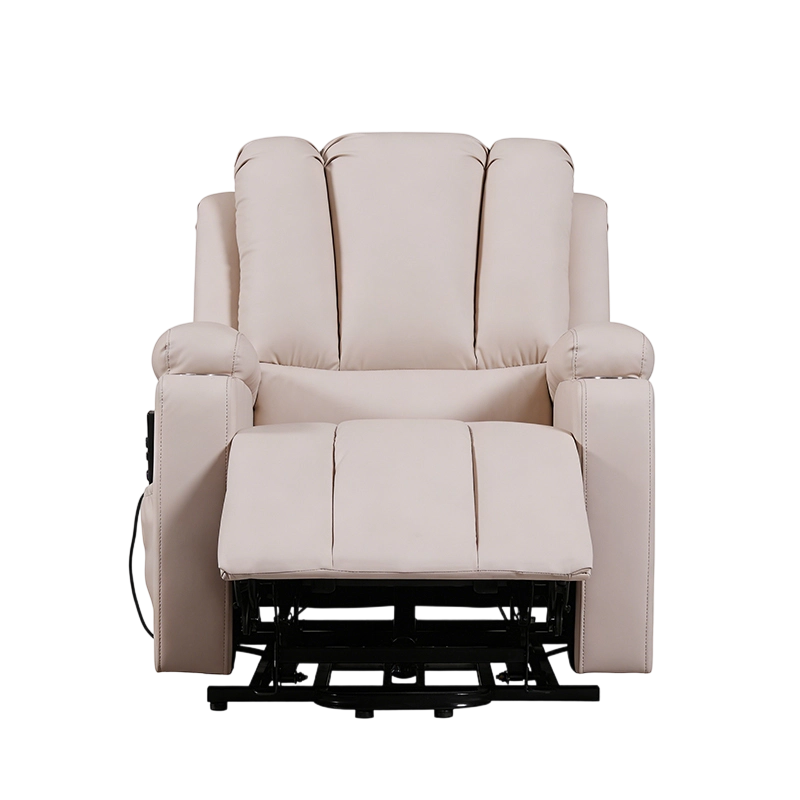
The lift chair mechanism that powers the standing assist function is typically a single-motor linear actuator mounted beneath the seat. When activated, it pushes the entire chair frame upward and forward along a curved path, lifting the seat to an angle of approximately 25–35 degrees from horizontal. This angle reduces the knee extension force required by the user by up to 70% compared to standing from a flat chair, according to biomechanical studies. The motor is rated for a specific lift capacity—commonly 135 kg to 170 kg for residential models—and the actuator's duty cycle determines how frequently the lift can be operated without overheating. High-quality actuators are tested to 20,000 cycles or more, which translates to over a decade of normal use for a typical user who stands up and sits down 5–6 times per day.
Electric Lift Chair Features That Determine Comfort and Safety
Modern electric lift chair features extend well beyond the basic lift and recline functions. The hand control is the primary user interface and should be evaluated for button size, tactile feedback, and whether a backlit display is included for use in low light. Many advanced models now offer wireless remote controls that eliminate the risk of cord tangling and can be stored in a side pocket. A critical safety feature is the battery backup system, which automatically activates the lift function during a power outage so the user can safely rise from the chair. This is particularly important for users who live alone and could be stranded in a partially reclined position if the power fails.
| Feature | Description | Benefit |
|---|---|---|
| Battery Backup | Integrated rechargeable battery | Operates lift during power loss |
| Heat and Massage | Heating elements and vibration motors in seat and back | Relieves muscle tension and improves comfort |
| Pocketed Coil Seating | Individually wrapped springs in seat cushion | Prevents bottoming out, extends cushion life |
| Waterfall Seat Front | Rounded front edge of seat cushion | Reduces pressure behind knees, improves circulation |
| USB Charging Port | Built-in USB port on remote or chair frame | Convenient charging of phones and tablets |
Upholstery selection is another practical electric lift chair feature that affects both durability and maintenance. Polyester and microfiber fabrics are stain-resistant and easy to clean, making them suitable for users who eat or drink in the chair. Performance fabrics with a polyurethane barrier layer prevent liquid from soaking into the cushion, extending the interior foam's life. Genuine leather or high-grade bonded leather offers a premium look and is easier to wipe down, but it can feel cold in winter and may crack if not conditioned periodically. The cushion core itself is typically high-density polyurethane foam with a density of 2.0 to 2.5 pounds per cubic foot, which resists compression set over years of daily use. A chair that looks comfortable in a showroom but uses low-density foam will develop permanent depressions within months, undermining both comfort and the postural support the chair is designed to provide.
Swivel Recliner Chair Benefits for Mobility and Daily Living
The swivel recliner chair benefits extend beyond the obvious assistance with standing. By incorporating rotation, the chair becomes a versatile hub from which the user can access multiple areas of a room without repeatedly standing and repositioning. In a living room, the user can swivel from watching television to facing the dining table for a meal, to turning toward the door to greet a visitor, all without rising. This reduces the number of sit-to-stand cycles each day, decreasing fatigue and cumulative joint stress. For a caregiver, the swivel function is equally valuable: it allows the caregiver to turn the seated user toward them for easier assistance with dressing, transfers to a wheelchair, or medical checks, reducing the physical strain on both parties.
An often-overlooked benefit of a swivel lift chair is fall prevention during the sit-to-stand transition. Falls are the leading cause of injury among older adults, and a significant proportion of these falls occur when an individual rises from a chair, loses balance, and cannot pivot safely to reach a walker or cane. A swivel chair that is pre-positioned to face the direction of travel before standing eliminates the need to pivot on one foot while rising, a movement that requires significant core strength and proprioception. Clinical guidelines for home safety frequently recommend a stable chair with armrests and a lift function; adding swivel capability addresses the rotational stability gap that a standard lift chair leaves unaddressed.
Power Recliner Chair Applications Across Home and Care Settings
Power recliner chair applications are rapidly expanding beyond the living room as the technology becomes more widely recognized and reimbursed through medical equipment programs. In the home, the electric recliner sofa chair serves as the primary seating for an individual with mobility challenges, often placed near a window or television and accompanied by a side table with essentials. In assisted living facilities and nursing homes, these chairs are specified in resident rooms because they reduce the staff assistance required for transfers, which lowers the risk of caregiver back injuries. A single staff member can operate the chair's lift and swivel functions to bring a resident to a standing position, whereas manually assisting a person of similar weight would require two caregivers.
Hospice and palliative care settings use adjustable lift recliner chair models with infinite positioning to manage pain and respiratory function. The Trendelenburg position—where the legs are elevated above the head—can be achieved with independent footrest and backrest control, helping to mobilize secretions and improve comfort for patients with respiratory conditions. Bariatric lift chairs with reinforced frames and high-torque actuators support users weighing up to 270 kg, ensuring that mobility assistance is available regardless of body type. This breadth of application demonstrates that the swivel lift chair is not a luxury item but a functional medical device that adapts to the user's changing needs over time.
Selecting a Swivel Lift Chair: Factors to Evaluate
Choosing the correct power lift recliner chair involves measuring the user's height, weight, and the specific health conditions that affect their mobility. The chair's seat height should allow the user to place their feet flat on the floor when the chair is in the seated position; seat depths ranging from 48 to 56 cm and seat heights from 46 to 53 cm accommodate most adults. The lift capacity must exceed the user's weight by a comfortable margin. The swivel range—whether a 90-degree, 180-degree, or full 360-degree rotation—should be matched to the room layout and the directions the user needs to face. Wall-hugger models are available that move the chair forward as they recline, allowing placement within 10–15 cm of a wall, a critical consideration in smaller rooms. By evaluating these factors alongside the features and mechanism quality, users and caregivers can select a swivel lift chair that provides safe, comfortable, and independent mobility for years.
LET'S TALK

Bai Shuiwan Industrial Park, Tian Huangping Town, Anji County, Huzhou City, Zhejiang Province, China
More About Us 
-
+86 18257273741
-
[email protected]
CONTACT US
Copyright © Anji Xuanbo Household Co., Ltd. All Rights Reserved.
Custom Modern Upholstered Sofa Manufacturers


