Focus on the manufacturing and export of functional sofas
-
 +86 18257273741
-
 [email protected]

 English
 Español
Industry News

Electric Swivel Recliner Chair: Features, Materials & Buying Advice
 2026.06.16
 Industry News
Content
What Is an Electric Swivel Recliner Chair
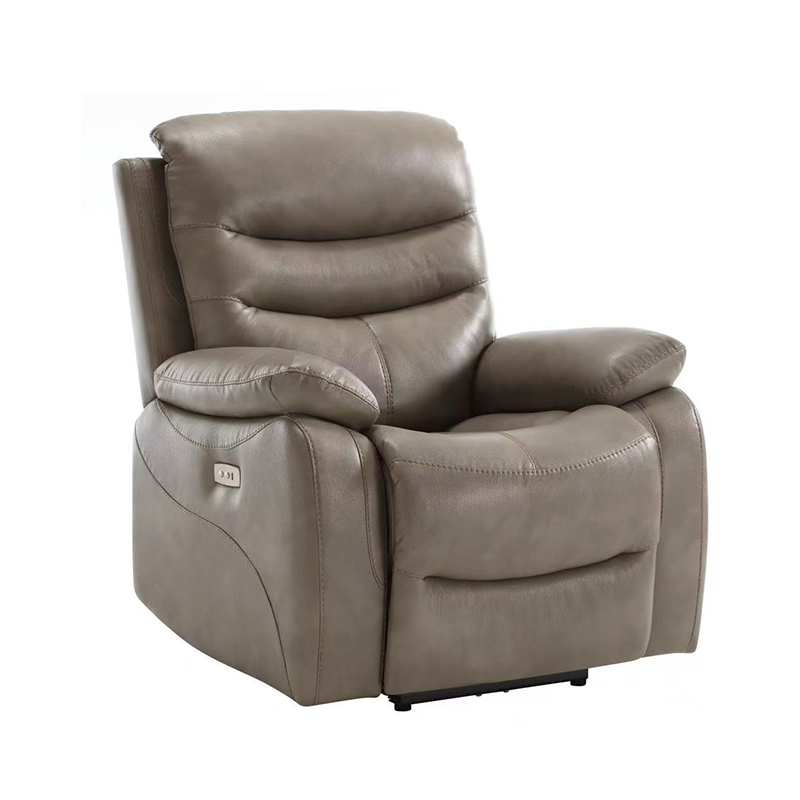
An electric swivel recliner chair combines three functions in a single piece of furniture: motorized reclining that adjusts the backrest and footrest position at the touch of a button, a 360-degree swivel base that allows the chair to rotate freely without repositioning, and an upholstered seating structure designed for extended comfortable use. The result is a chair that adapts to the user's position rather than requiring the user to adjust around a fixed piece of furniture.
The electric mechanism replaces the manual push-back or lever-pull systems found in traditional recliners. A low-voltage motor — typically 24V DC — drives a linear actuator that extends or retracts to move the footrest and recline the backrest, either independently or in a linked motion depending on the model. Controls are usually integrated into the armrest via a wired handset or a set of side-mounted buttons, with some models also offering wireless remote or app-based control.
Electric swivel recliners occupy a practical middle ground between standard armchairs and full power recliner sofas. They are compact enough to serve as standalone accent seating in a living room, home theater, bedroom, or home office, while offering a level of adjustability and ease of use that standard static seating cannot match.
How the Electric Reclining Mechanism Works
The core of an electric recliner is the linear actuator — a motorized rod that extends and retracts to move the chair's reclining components. When the user presses the recline button, the actuator pushes against the chair's internal frame to simultaneously raise the footrest and tilt the backrest rearward. In independently adjustable models, separate actuators control the footrest and backrest, allowing the user to, for example, raise the legs without reclining the back.
Most electric swivel recliners recline to angles between 110° and 170° from upright, with the flat or near-flat position enabling use as a temporary sleeping surface. The motor speed is calibrated to move slowly and smoothly rather than snapping between positions, which is both more comfortable and reduces mechanical stress on the mechanism over time.
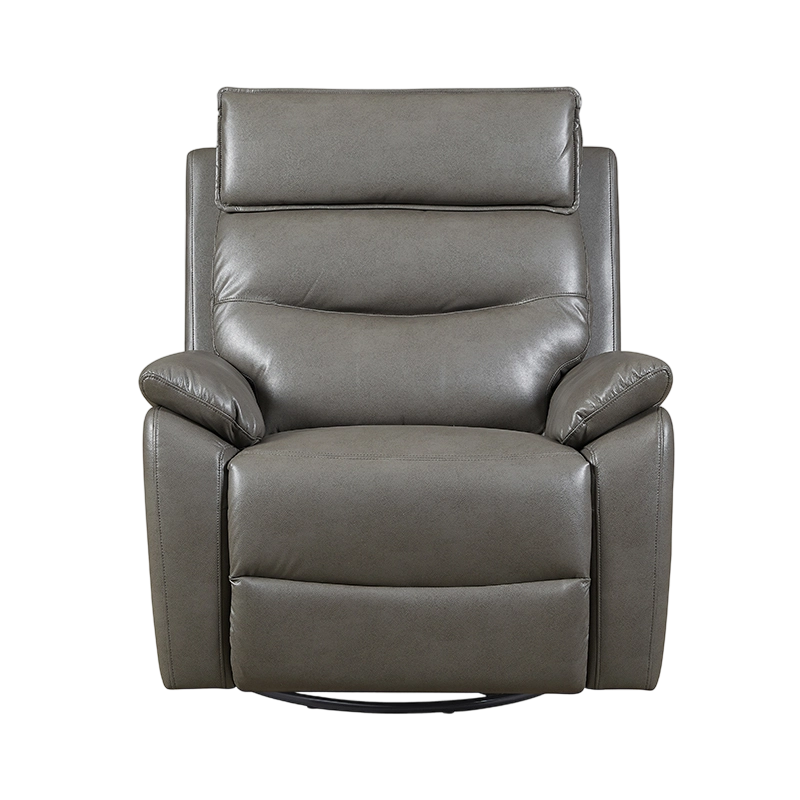
The swivel function operates independently of the reclining mechanism. The chair's seat and back assembly sits on a bearing-mounted swivel plate attached to the base, allowing rotation in any direction. In most designs, the swivel bearing is rated for the full weight of the chair plus occupant load over many thousands of rotation cycles. Better-quality chairs use steel ball bearing swivel plates; lower-cost models may use nylon bushings that wear more quickly.
Power is supplied via a standard household outlet through a transformer brick on the power cable. The chair must be positioned within cord reach of a wall outlet — typically the cable is 4 to 6 feet — which is a practical layout consideration often overlooked until installation. Some newer models include a rechargeable battery pack that eliminates the cord requirement, though battery models need periodic recharging.
Key Features to Evaluate Before Buying
Electric swivel recliners vary significantly in the features they include. Understanding what each feature contributes helps prioritize which matter for a given use case:
Independent vs Linked Recline Control
Linked systems move the footrest and backrest together in a single motion — simpler and typically more affordable. Independent control (sometimes called dual-motor) allows the footrest and back to be adjusted separately, enabling positions like upright with legs elevated (useful for circulation) or reclined back without a raised footrest. For users with specific postural needs or medical requirements, independent control is worth the additional cost.
Power Lift Function
Power lift recliners add a third motor function: the entire chair tilts forward and rises from the base, helping users with limited leg strength or mobility stand up from a seated position without assistance. This feature is particularly valuable for elderly users or those recovering from surgery. Chairs with lift functionality are typically heavier and require a higher weight-rated frame, but they substantially expand accessibility for a significant portion of potential users.
Heating and Massage Functions
Many electric swivel recliners incorporate integrated heating elements in the lumbar and seat areas, and vibration-based massage modules in the back and leg zones. Heating typically operates at low wattage (30–50W) through carbon fiber or wire heating pads sewn into the upholstery. Massage functions use vibration motors at multiple points, usually with adjustable intensity settings and zone selection. These functions add meaningful comfort for extended sessions but also add electrical components that can fail over the product's life — checking the warranty coverage on these specific features is worthwhile.
USB and Storage Integration
Integrated USB charging ports — typically built into the armrest or control panel — have become a standard feature in mid-range and above electric recliners, allowing device charging without leaving the chair. Some models also include side pockets, cup holders, or small storage compartments integrated into the armrests. These convenience features reflect the chair's role as a self-contained personal space for media consumption, remote work, or relaxation.
Weight Capacity
Standard electric swivel recliners are rated for 250–300 lbs. Heavy-duty or wide models extend this to 350–500 lbs, with a correspondingly larger seat width (typically 22–26 inches vs. the standard 19–21 inches). Exceeding a chair's rated capacity accelerates wear on both the mechanical components and the frame, and can void the warranty. The weight capacity should be confirmed from the product specification sheet, not inferred from the chair's appearance.
Upholstery Options: Leather, Faux Leather, and Fabric
Electric swivel recliners are available in three primary upholstery categories, each with distinct performance and maintenance characteristics:
- Genuine leather: The most durable and premium option. Full-grain and top-grain leather develop a patina over time and, with basic conditioning, can last 15–25 years. Leather is easy to wipe clean, does not trap pet hair or allergens, and remains visually appealing across design styles. The drawback is temperature sensitivity: leather feels cold initially in cool environments and can feel warm in humid heat. Cost is significantly higher than alternatives.
- Faux leather (PU or bonded leather): The most common upholstery in mid-range electric recliners. PU leather mimics the appearance of genuine leather at a fraction of the cost and is easy to clean. Quality varies significantly — high-density PU performs well for 5–8 years; low-quality bonded leather (made from leather scraps bonded to a fabric backing) tends to peel and crack within 2–4 years, particularly at high-flexion points like the seat edge and armrests. Asking specifically whether the product uses "PU leather" or "bonded leather" is useful when evaluating budget options.
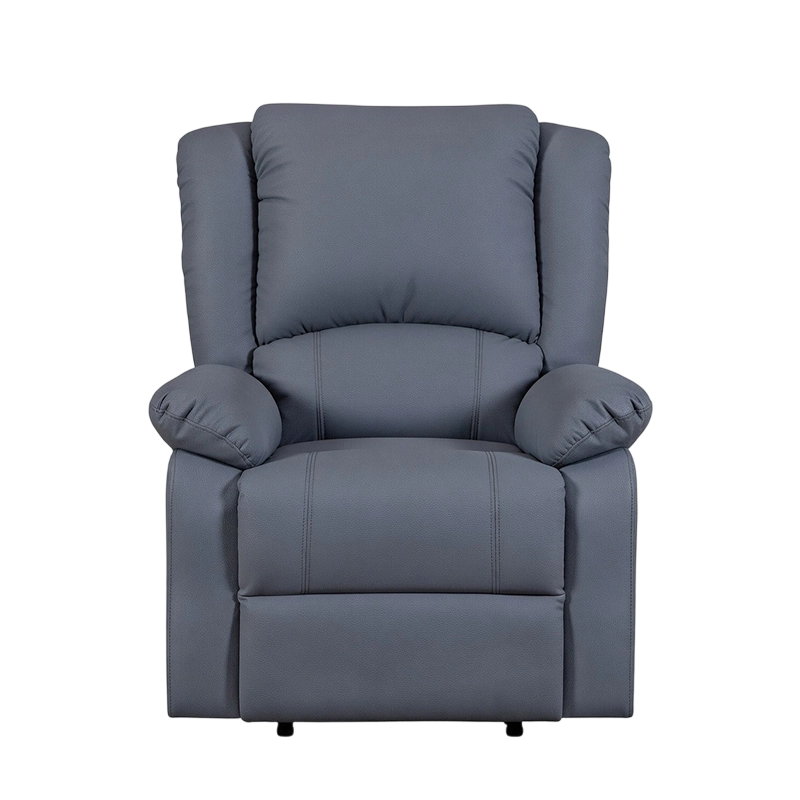
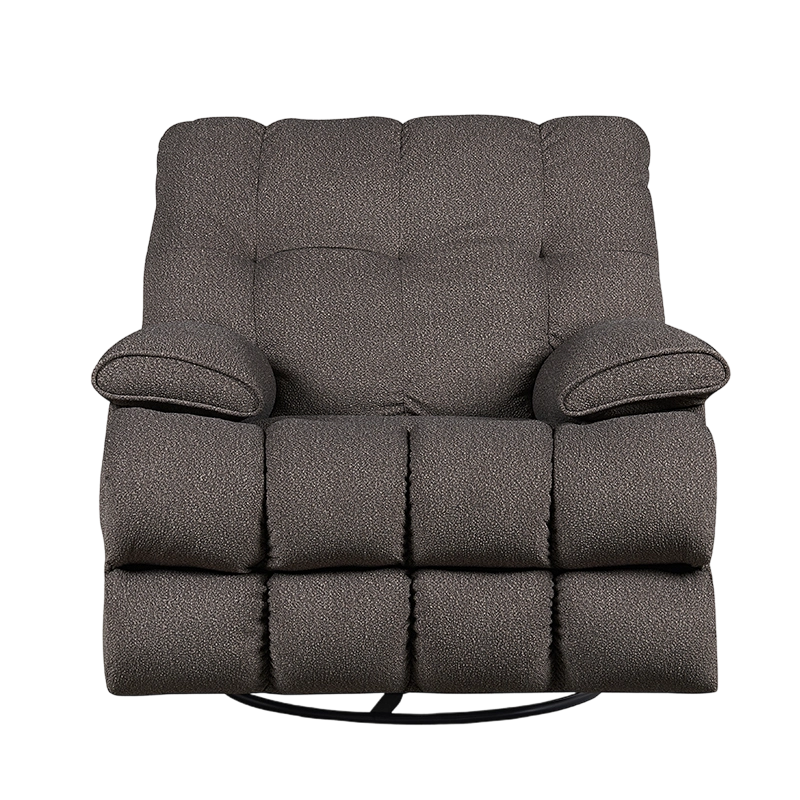
- Performance fabric: Woven or microfiber fabrics offer a softer, more breathable seating surface that does not feel temperature-sensitive like leather. Modern performance fabrics are stain-resistant and durable, though they require more effort to clean thoroughly than smooth leather surfaces. Fabric recliners work well in bedrooms and offices where leather's formal aesthetic is less appropriate.
Space Requirements and Room Placement
Electric swivel recliners require more clearance than their upright footprint suggests. In the fully reclined position, the footrest extends forward by 18–24 inches beyond the chair's front edge, and the backrest extends rearward. The total reclined length of a standard model is typically 60–72 inches — roughly the length of a single bed. This clearance zone must be kept free of walls, coffee tables, and other furniture for the chair to recline fully without obstruction.
Some electric recliners are marketed as "wall-hugger" designs, where the seat slides forward as the back reclines, keeping the rear of the chair close to the wall. True wall-hugger models can recline fully with as little as 4–6 inches of clearance from the wall, compared to 12–18 inches for standard designs. This distinction is practically significant in smaller rooms or when placing a chair in a corner configuration.
The swivel function requires unobstructed clearance on all sides equal to the chair's widest dimension (typically 32–36 inches across the armrests) plus enough rotational space for the user's legs when turning. In a tight room layout, this can limit practical placement options — the chair should be able to complete a full rotation without the footrest or armrests contacting adjacent furniture.
Power cord routing is a practical consideration that most buyers finalize after delivery rather than before. Positioning the chair near a baseboard outlet or using a cord cover strip along the floor keeps the power cable managed without a visible run across open floor space. Running an extension cord is generally acceptable for low-draw recliner motors (typically 50–150W total), but a dedicated outlet is cleaner and eliminates tripping hazard from cords routed across walking paths.
Durability and What to Check Before Purchase
The motorized mechanism is both the primary benefit and the primary long-term risk in an electric recliner. Unlike a manual recliner with few moving parts, an electric model depends on a motor, actuator, wiring harness, and control circuit that can each fail independently. Evaluating durability before purchase reduces the risk of problems after the return window closes:
- Motor warranty: Reputable manufacturers warrant the motor and mechanism separately from the frame and upholstery. A 3–5 year motor warranty is standard for quality electric recliners; 1 year or less suggests a lower-grade mechanism. Confirm whether the motor warranty covers parts only or parts and labor.
- Frame construction: Kiln-dried hardwood frames resist warping and hold screws better than engineered wood or particleboard. Steel-reinforced corners and corner blocks at the joint points add rigidity. A frame that flexes or creaks when you sit down in a showroom will only worsen with use.
- Actuator noise: Electric actuators make some sound during operation — a faint hum is normal. Grinding, clicking, or uneven movement in a new chair suggests a lower-quality actuator or an assembly issue that is unlikely to improve over time.
- Swivel bearing quality: The swivel plate should rotate smoothly and evenly under full occupant weight. Resistance, wobble, or uneven rotation in a new chair indicates a bearing or alignment issue in the swivel assembly.
- Cushion density: Seat cushions in electric recliners are typically high-density foam (1.8–2.2 lbs/cubic foot for quality units) with a fiber wrap for initial softness. Low-density foam compresses and sags within a year or two of regular use. Pressing firmly on the seat cushion in a showroom gives a rough sense of foam density — very fast rebound to full height suggests lower density.
LET'S TALK

Bai Shuiwan Industrial Park, Tian Huangping Town, Anji County, Huzhou City, Zhejiang Province, China
More About Us 
-
+86 18257273741
-
[email protected]
CONTACT US
Copyright © Anji Xuanbo Household Co., Ltd. All Rights Reserved.
Custom Modern Upholstered Sofa Manufacturers


