Focus on the manufacturing and export of functional sofas
-
 +86 18257273741
-
 [email protected]

 English
 Español
Industry News

Swivel Rocker Recliners: Types, Materials & How to Choose
 2026.06.12
 Industry News
Content
- 1 Recliners That Swivel and Rock: What the Mechanism Actually Does
- 2 Recliners with Swivel Base: Frame and Base Construction Compared
- 3 Best Small Swivel Rocker Recliners: Choosing for Compact Spaces
- 4 Leather Swivel Recliner Armchairs and Ottoman Pairings
- 5 Recliner vs. Accent Chair: Key Feature Differences
- 6 Wall Recliner vs. Rocking Recliner: Which Mechanism Fits Your Room
Recliners That Swivel and Rock: What the Mechanism Actually Does
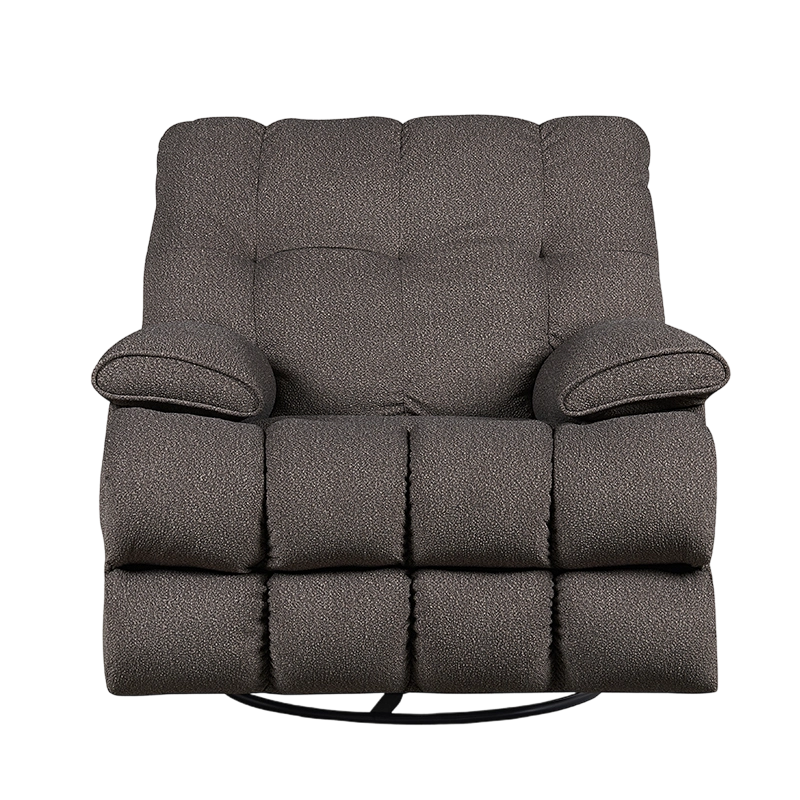
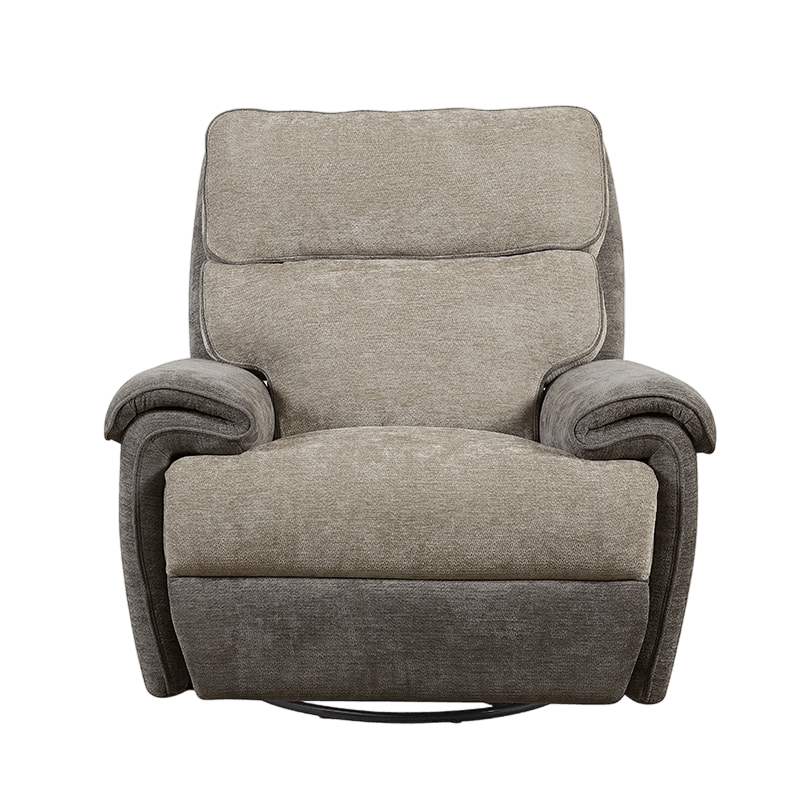
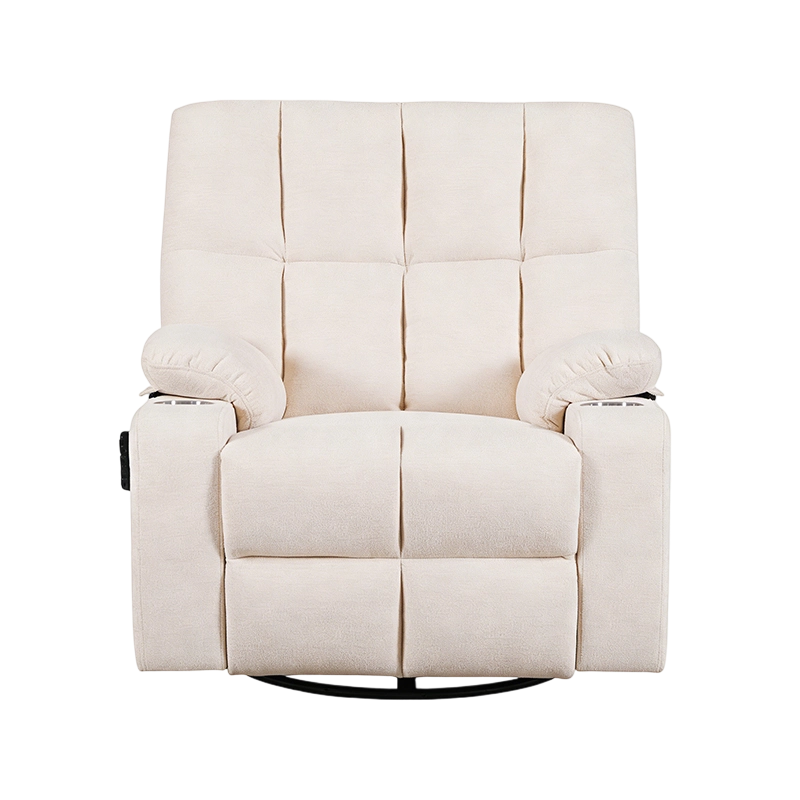
A swivel rocker recliner combines three independent movement systems in one frame: a 360° swivel base that rotates the entire chair, a rocker mechanism that pitches the seat forward and back on a curved rail, and a reclining backrest that extends the footrest and lowers the seatback independently of the other two. Each system operates on a separate pivot point, which is why these chairs feel noticeably different — and more expensive — than a standard recliner that only reclines.
The practical benefit of stacking all three functions is freedom of orientation. You can face the television, swivel toward a conversation, and recline without relocating the chair or adjusting its position on the floor. For nurseries, living rooms with multiple focal points, or any room where one person uses a chair across several activities during the day, this flexibility is genuinely useful rather than a marketing feature.
Mechanical differences to know before buying:
- Ball-bearing swivel bases rotate smoothly under load and resist noise over time; plastic-bushing bases are quieter initially but degrade faster under heavy use.
- Spring-coil rocker platforms provide more resistance and a slower, controlled rock; sinuous-spring versions tend to feel bouncier and are more common in budget models.
- Manual vs. power recline: Manual push-back or pull-tab recliners weigh less and require no electrical access; power recliners add programmable positions and are preferred for users with limited grip strength or mobility issues.
Recliners with Swivel Base: Frame and Base Construction Compared
The swivel base is the most mechanically stressed component of any rotating recliner — it bears the full weight of the chair plus occupant while rotating, and it must maintain alignment through the rocker and recliner cycles simultaneously. Base quality is therefore the primary factor separating durable recliners from those that develop wobble or creaking within two to three years.
| Base Type | Material | Weight Capacity (Typical) | Best For |
|---|---|---|---|
| 5-star pedestal | Steel or aluminum | 250–350 lbs | Standard residential use |
| Disc/platform base | Hardwood or engineered wood | 250–300 lbs | Traditional/transitional styles |
| Heavy-duty steel frame | Welded steel | 400–500 lbs | Bariatric / high-frequency use |
One specification frequently omitted in product listings is the swivel ring diameter. A wider ring (typically 18–22 inches on quality models versus 12–15 inches on budget versions) distributes rotational load more evenly and significantly extends the bearing life. If the spec isn't listed, ask the retailer — it's a reliable proxy for overall base quality.
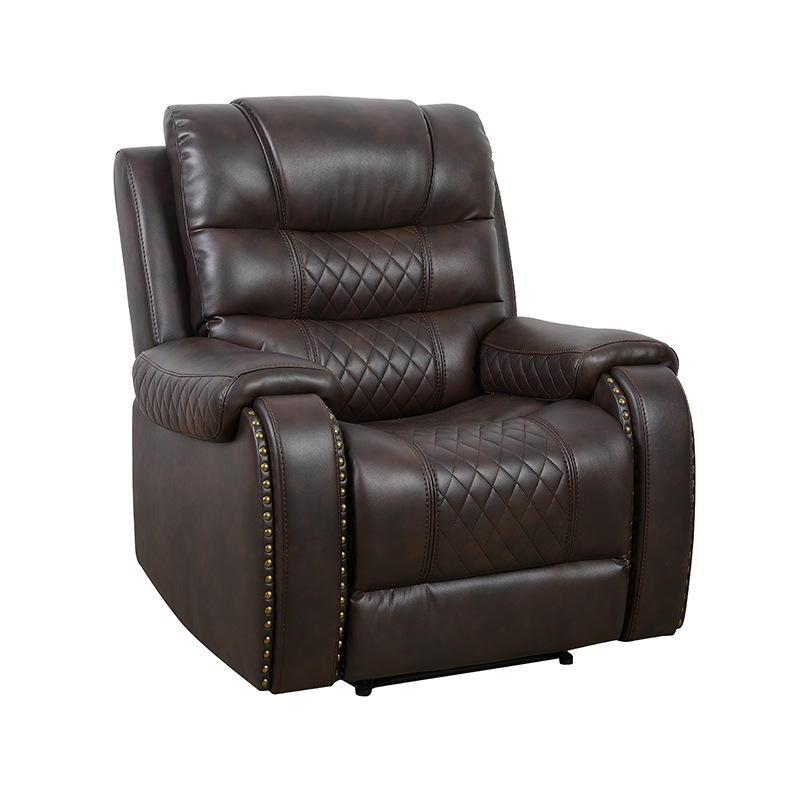
Best Small Swivel Rocker Recliners: Choosing for Compact Spaces
Standard full-size swivel rocker recliners typically measure 32–36 inches wide and 38–42 inches deep in the upright position, expanding to 60–68 inches in depth when fully reclined. In a smaller room or apartment, that footprint can dominate — which is why a defined category of compact swivel rockers has emerged, targeting seats with a width under 30 inches and a reclined depth under 58 inches.
What to prioritize in a small-footprint swivel recliner:
- Wall-clearance or wall-hugger mechanism: These recliners require only 4–6 inches of clearance behind the chair rather than the 12–18 inches needed by standard recliners — the single most useful feature for tight spaces (covered in detail below).
- Seat depth adjustability: Lumbar pillows or adjustable headrests compensate for a shallower seat without compromising support.
- Leg clearance at base: A smaller swivel base diameter (14–16 inches) reduces the visual footprint and limits accidental contact with adjacent furniture.
- Scale-appropriate proportions: A compact swivel recliner with a high wingback or oversized headrest will still read as bulky — low-profile backs and trimmer arms maintain a lighter visual weight.
For nurseries specifically, compact swivel rockers are almost universally preferred over full-size models. A 28-inch-wide chair with a 300° swivel lock (rather than full 360°) prevents the chair from catching on cribs or room dividers during nighttime use — a detail worth confirming before purchase.
Leather Swivel Recliner Armchairs and Ottoman Pairings
Leather swivel recliners represent the upper segment of the recliner category, both in price and in long-term value retention. Full-grain and top-grain leather develops a patina with use, becoming more supple and visually rich over time — a quality no fabric upholstery replicates. For a chair that will see daily use for a decade or more, leather's durability-to-cost ratio often outperforms microfiber or performance fabric alternatives.
Leather grades relevant to swivel recliner buyers:
- Full-grain leather: The outermost hide layer, minimally processed. Most durable, breathes naturally, develops character with age. Highest cost.
- Top-grain leather: Sanded and finished for uniformity. More stain-resistant than full-grain but slightly less breathable. The most common grade in mid-to-high-end recliners ($800–$2,500).
- Bonded leather: Leather scraps adhered to a fabric or polyurethane backing. Significantly cheaper but prone to peeling within 3–5 years under regular use. Avoid for primary seating.
- Faux/PU leather: Entirely synthetic. Easier to clean than genuine leather, uniform appearance, but lacks breathability and does not age gracefully.
Swivel leather recliners with matching ottomans serve a different function than built-in footrests. A detached ottoman allows independent positioning — the occupant can adjust leg elevation without affecting the chair's recline angle, which is particularly valuable for those managing lower back, hip, or circulation issues. Ottoman pairing also makes the combination suitable as occasional guest seating when stored separately.
When specifying a leather recliner-plus-ottoman set, confirm that both pieces use hides from the same tannery batch. Color matching across production runs is inconsistent in lower-price leather goods, and the mismatch becomes more pronounced as both pieces age and develop different patinas.
Recliner vs. Accent Chair: Key Feature Differences
The core functional difference is straightforward: a recliner is engineered around adjustable positions; an accent chair is engineered around a fixed aesthetic statement. In practice, the categories diverge across several specific dimensions that affect both buying decisions and room planning.
| Feature | Recliner (Swivel/Rocker) | Accent Chair |
|---|---|---|
| Primary design priority | Ergonomic comfort, adjustability | Visual style, room composition |
| Frame weight | Heavy (mechanism hardware) | Light to moderate |
| Floor clearance required | 12–18 inches (standard) / 4–6 inches (wall hugger) | None |
| Upholstery options | Fabric, leather, faux leather | Fabric, leather, velvet, boucle, woven |
| Leg elevation | Integrated footrest (or ottoman) | Separate ottoman required |
| Extended sitting (2+ hours) | Well-suited | Variable; depends on cushion depth |
| Style versatility | Moderate (design often secondary) | High (designed as room focal point) |
The practical conclusion: recliners win for everyday primary seating where comfort and posture are the priority; accent chairs win when visual flexibility, styling range, and room aesthetics take precedence. For households that want both, a compact swivel recliner in a neutral leather paired with a styled accent chair on the opposite side of a coffee table is a common and effective solution.
Wall Recliner vs. Rocking Recliner: Which Mechanism Fits Your Room
This is one of the most practically consequential decisions in recliner selection, and it hinges almost entirely on room layout rather than personal preference.
Wall recliners (wall-huggers) use a forward-sliding mechanism: as the back reclines, the seat glides toward the footrest rather than pushing the back of the chair away from the wall. This design requires only 4–6 inches of clearance between the chair back and the wall — making it the default choice for apartments, small living rooms, bedroom reading nooks, and any placement where furniture sits within 18 inches of a wall or window.
Rocking recliners use a traditional arc-based mechanism that pivots around a fixed point near the base. As the back reclines, the chair back swings outward — requiring the standard 12–18 inch clearance. The rocking motion itself is separate from the recline function and operates through the same curved-rail base described earlier. Rocking recliners are generally more comfortable in the fully reclined position because the pivot geometry allows a flatter, more neutral sleeping angle than most wall-hugger designs achieve.
Summary comparison:
- Choose a wall recliner if: the chair placement is within 18 inches of a wall, baseboard heater, or built-in; if you're furnishing a small room; or if you need to maximize walkway clearance around the chair.
- Choose a rocking recliner if: clearance is not a constraint; you want to use the rocking function while upright (e.g., nursing, reading, watching television); or you prioritize the flattest possible reclined position for sleeping.
- Note on swivel compatibility: Both wall-hugger and rocker mechanisms are available with swivel bases, though wall-hugger swivel combinations are less common and tend to sit in the mid-to-upper price tier. Confirm mechanism type explicitly in the product spec before purchase — "swivel recliner" does not indicate whether wall clearance is required.
If in doubt, measure the available wall clearance before selecting a mechanism type. A correctly-specified wall-hugger in a tight room will outlast and outperform a rocking recliner that's constantly hitting the baseboard — mechanism longevity is directly affected by whether the chair has adequate space to complete its full range of motion.
LET'S TALK

Bai Shuiwan Industrial Park, Tian Huangping Town, Anji County, Huzhou City, Zhejiang Province, China
More About Us 
-
+86 18257273741
-
[email protected]
CONTACT US
Copyright © Anji Xuanbo Household Co., Ltd. All Rights Reserved.
Custom Modern Upholstered Sofa Manufacturers


