Focus on the manufacturing and export of functional sofas
-
 +86 18257273741
-
 [email protected]

 English
 Español

Industry News
 Home / News / Industry News / How Anti-Pinch Safety Sensors Prevent Accidents in Electric Power Lift Chairs
How Anti-Pinch Safety Sensors Prevent Accidents in Electric Power Lift Chairs
 2026.11.09
 Industry News
Content
- 1 Why Anti-Pinch Safety Sensors Are Essential in Electric Power Lift Chairs
- 2 How Anti-Pinch Safety Sensors Work
- 3 Core Safety Features That Support Anti-Pinch Protection
- 4 Choosing a Safe Electric Power Lift Chair
- 5 Comfort and Safety Are Not Separate Decisions
- 6 Manufacturing and Sourcing Considerations
- 7 Maintenance Checks That Keep Anti-Pinch Sensors Reliable
- 8 FAQ
- 9 Conclusion
Electric power lift chairs help older adults and people with reduced mobility stand up, sit down, and recline without placing unnecessary strain on the knees or back. Because these chairs are powered by motors, the moving footrest, armrest, and backrest can create natural pinch points. Anti-pinch safety sensors are designed to prevent accidents by detecting obstructions and stopping or reversing the chair movement before pressure can build up. This article explains how these sensors work, why they matter for electric power lift chairs, and what buyers should consider when specifying a safe model.
Why Anti-Pinch Safety Sensors Are Essential in Electric Power Lift Chairs
Power lift chairs move deliberately, but the motor develops enough force to cause injury if a hand, finger, or small object becomes trapped. Many users are older adults who may have limited sensation or slower reaction times, so they cannot always pull away in time. Children and pets can also approach the chair during operation, increasing the possibility of pinching.
A pinch incident can develop in seconds but leave lasting soft tissue damage, which is why sensor-based prevention is now considered a core safety function in modern power lift chairs.
Common pinch zones include:
- The footrest hinge area, where the footrest folds out and back.
- The gap between the armrest and the seat cushion during the lift motion.
- The space between the backrest and the frame when the chair reclines.
- The lower base area where the scissor mechanism moves during the rise and lower cycle.
That is why anti-pinch detection is such a valuable safety layer. For importers and retailers, sensor coverage reduces product liability risk and return rates. For caregivers and users, it adds confidence to daily use.
How Anti-Pinch Safety Sensors Work
An anti-pinch system uses a closed loop of detection, control, and motor action. When a sensor detects an obstacle, it sends a signal to the control board. The control board then interrupts motor power or reverses the motor direction for a short distance to free the trapped object.
Most electric power lift chairs use more than one sensing technology. The table below shows common anti-pinch sensing options used in lift chair designs.
| Sensor Type | How It Detects Risk | Typical Location |
|---|---|---|
| Contact or limit sensor | Stops motion when an object physically touches a switch or edge sensor | Footrest edge, armrest gap |
| Infrared proximity sensor | Detects obstruction before direct contact using an infrared beam | Side panels, footrest hinge area |
| Current-sensing motor monitor | Detects abnormal motor current caused by resistance and shuts the motor off | Inside the motor housing |
| Manual stop and emergency reset | Allows the user or caregiver to halt motion immediately | Side panel, remote control |
The best systems combine more than one sensing method. For example, an infrared proximity sensor can identify a child's hand before it enters a narrow gap, while a current-sensing monitor provides a backup if physical contact occurs. Lift chairs built with coordinated engineering are less likely to deliver delayed or false sensor responses. A supplier with in-house product and production experience, such as Anji Xuanbo Household Co., Ltd., can better integrate sensor calibration into the complete lift mechanism.
Core Safety Features That Support Anti-Pinch Protection
Anti-pinch sensors are most effective when they work together with other safety systems. A chair can prevent pinching, but it still needs to remain stable and controllable during movement.
- Anti-tip base and locking casters keep the chair stable during lifting and reclining.
- Battery backup lets the chair return to a safe position during a power outage.
- Emergency stop control gives the user or caregiver an immediate way to halt the motor.
- Pinch-free trim and gap covers reduce exposed spaces where fingers can enter.
A well-designed electric power lift chair should not rely on sensors alone. Mechanical design, motor speed, and electrical protection work together to keep the user safe in every phase of the lift cycle.
Choosing a Safe Electric Power Lift Chair
Start by measuring the user's height, weight, seat width, and hip width. Confirm that the chair's weight capacity exceeds the user's actual weight by a comfortable margin. Ask about anti-pinch coverage and how the sensor system is tested during production.
- Sensor coverage at the footrest, armrest, and backrest.
- Adjustable sensitivity to reduce unwanted stops.
- Battery backup included as a standard feature.
- Clear emergency stop control on the side panel or remote.
- Durable motor and frame designed for daily use.
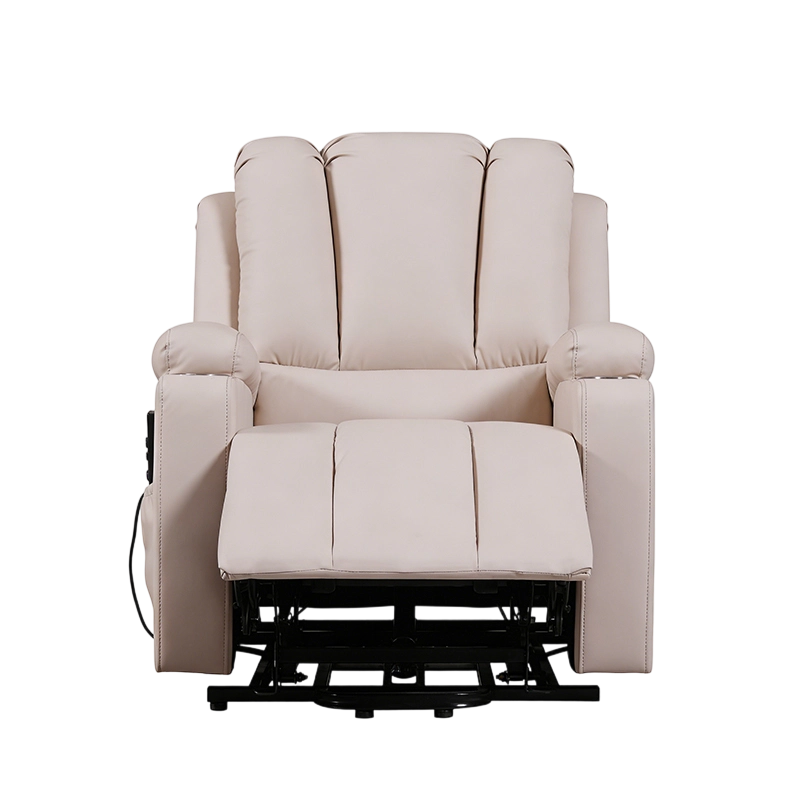
For users who need more side clearance, an extra-wide model helps distribute pressure and makes it easier to get in and out of the chair safely.
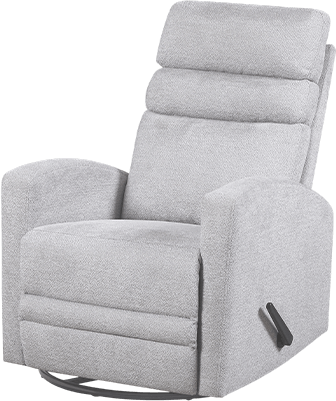
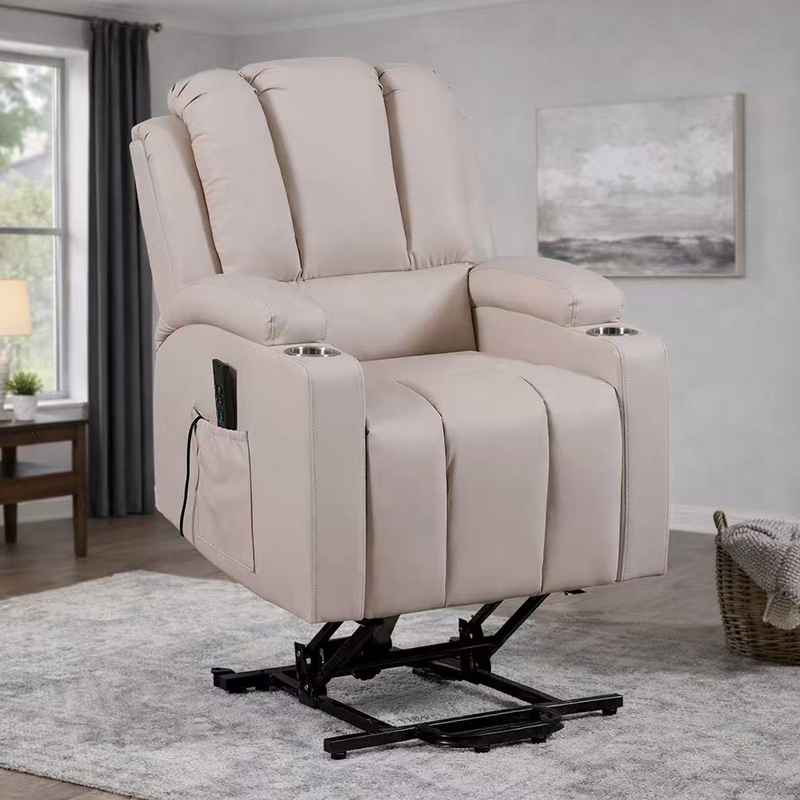 Extra Wide Power Lift Recliner with Wired ControllerThis extra-wide model offers generous side clearance for easier entry and exit. Its overstuffed cushioning and silent motor support heavier users, while the wired controller and side pocket add convenience.View Product →
Before selecting capacity, review the buyer's guide to heavy-duty power lift recliners to match motor strength with user weight.
Comfort and Safety Are Not Separate Decisions
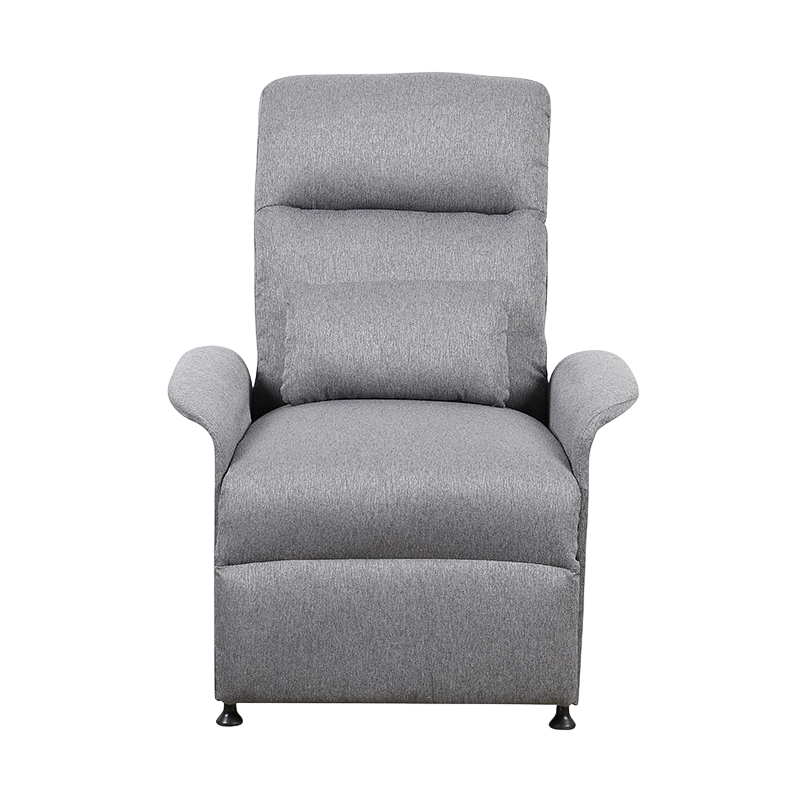
Long sitting sessions are common among lift chair users, so cushioning and comfort features matter. Some chairs add vibration massage and soft chenille upholstery while maintaining the same anti-pinch control system. This allows users to enjoy therapeutic comfort without giving up protective sensor functions.
 Chenille Power Lift Recliner with Vibration Massage and HeatDual motors recline near 180 degrees and lift smoothly. Eight-point massage, lumbar heat, and soft chenille upholstery provide therapeutic comfort without sacrificing the anti-pinch safety system.View Product →
When sourcing lift chairs for a retail brand or healthcare channel, comfort and safety should be reviewed together. A chair that is not pleasant to sit in is less likely to be used consistently, so the safety system should be integrated into a comfortable seat rather than added as an afterthought.
Manufacturing and Sourcing Considerations
Most electric power lift chairs are made overseas, often in manufacturing hubs such as Anji, China. When sourcing for a brand, retail chain, or healthcare channel, examine the supplier's ability to document its safety functions clearly.
- Ask for sensor calibration records and sample test videos.
- Look for wiring quality and strain relief around moving parts.
- Check whether replacement controls and sensors are easy to source.
- Ask for warranty terms covering the motor, electronics, and frame.
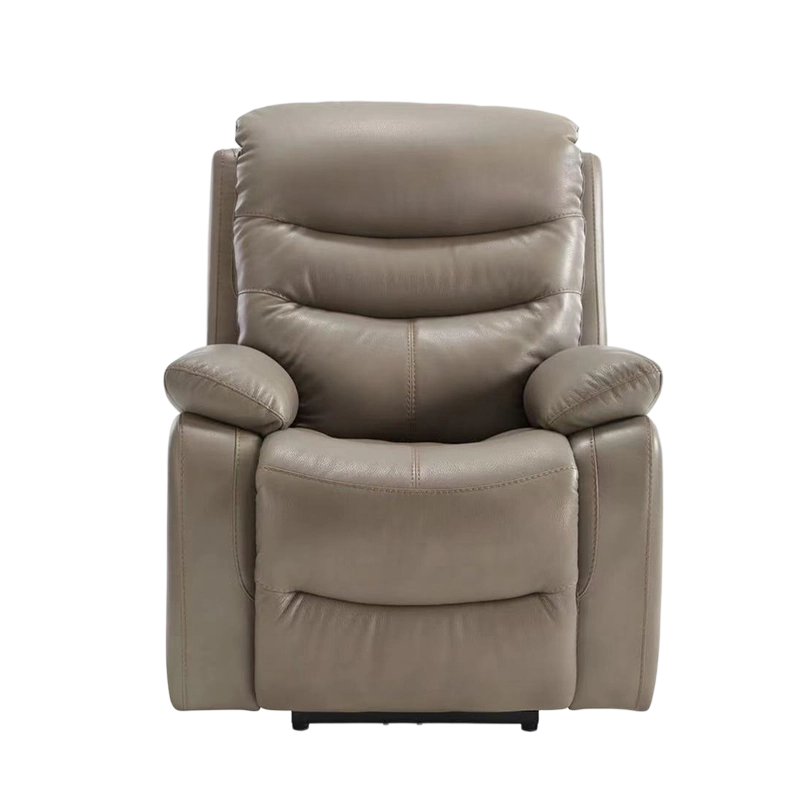
If the target user group includes heavier adults, a heavy-duty design should be specified because it uses a stronger motor and reinforced frame.
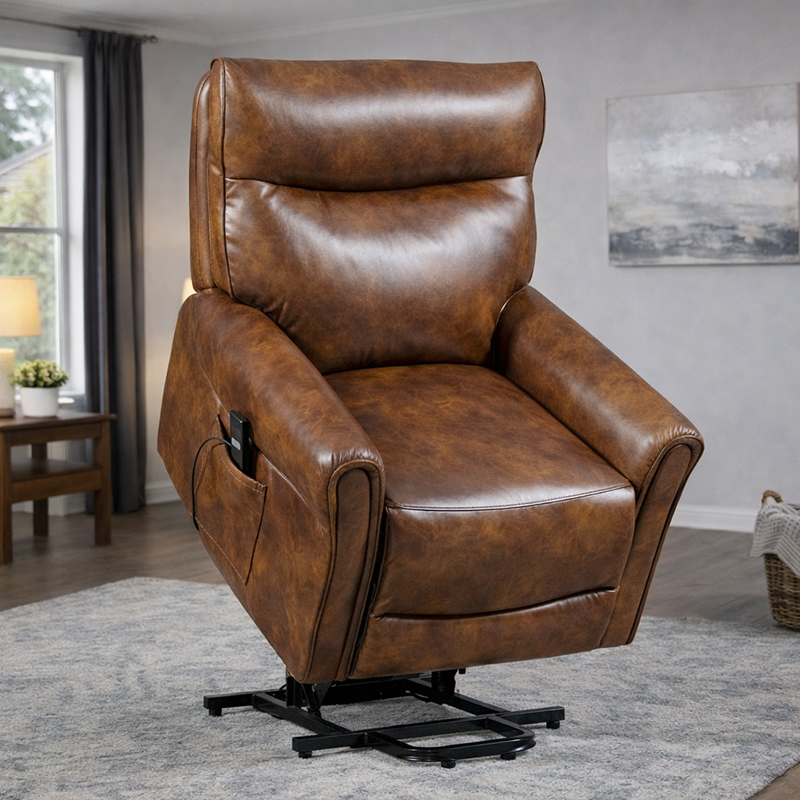 Heavy-Duty Power Lift Recliner with Overstuffed CushioningBuilt for heavier adults with a reinforced frame and stronger motor. Plush pocket-spring cushions and breathable leather allow smooth reclining up to 140 degrees, while the side pocket keeps essentials close.View Product →
A responsible manufacturer should be able to explain how the anti-pinch system behaves in different scenarios, including power loss, sudden obstruction, and normal reclining motion.
Maintenance Checks That Keep Anti-Pinch Sensors Reliable
An anti-pinch sensor is only useful when it is clean and correctly connected. Routine maintenance helps prevent false stops and ensures that the safety system responds properly when needed.
- Check sensor windows for dust, pet hair, or fabric lint.
- Inspect power cords and internal wiring for visible damage.
- Perform a monthly motion test according to the owner's manual.
- Keep the battery backup in good condition and fully charged.
If the chair stops unexpectedly or moves more slowly than usual, stop using it and arrange service before the next use.
FAQ
Q1: Does an anti-pinch sensor mean the chair is 100% safe?
No. The sensor greatly reduces pinch injury risk, but users should still keep hands and feet away from moving parts during operation. Children and pets should not play under or around a moving lift chair.
Q2: Can a buyer test the anti-pinch system before placing an order?
Yes. A buyer can request a demonstration, inspect the sensor locations, and ask for functional testing records. A reliable supplier should explain the sensor logic and the test procedure used on the production line.
Q3: Do lift chairs with anti-pinch sensors cost more?
There may be a modest price increase because of added control components and testing, but the cost is usually small compared with the safety benefit and liability reduction.
Q4: What is the difference between anti-pinch and anti-tip features?
Anti-pinch prevents body parts and objects from being trapped by moving parts. Anti-tip keeps the chair stable on the floor during the lift and recline cycles. Both are important for safe daily use.
Conclusion
Anti-pinch safety sensors are no longer an optional extra in a well-designed electric power lift chair. They protect vulnerable users, reduce caregiver stress, and lower risk for brands and importers. When paired with a stable base, emergency controls, and regular maintenance, sensors make electric lift chairs noticeably safer for daily use.
LET'S TALK

Bai Shuiwan Industrial Park, Tian Huangping Town, Anji County, Huzhou City, Zhejiang Province, China
More About Us 
-
+86 18257273741
-
[email protected]
CONTACT US
Copyright © Anji Xuanbo Household Co., Ltd. All Rights Reserved.
Custom Modern Upholstered Sofa Manufacturers


