Focus on the manufacturing and export of functional sofas
-
 +86 18257273741
-
 [email protected]

 English
 Español
Industry News

Manual vs Electric Corner Sofa: Which Suits Your Lifestyle Best?
 2026.04.10
 Industry News
Content
- 1 The Verdict: Electric Corner Sofas Lead on Comfort, Manual Wins on Value
- 2 Understanding the Core Mechanisms
- 3 Cost Analysis: Initial Investment and Long-Term Value
- 4 Ergonomics and Health Implications
- 5 Durability and Maintenance Realities
- 6 Space and Placement Requirements
- 7 Feature Comparison: Beyond Basic Reclining
- 8 Environmental and Energy Considerations
- 9 Decision Framework: Matching Sofa Type to Lifestyle
- 10 Final Recommendations
The Verdict: Electric Corner Sofas Lead on Comfort, Manual Wins on Value
Electric corner sofas offer superior ergonomic adjustment and modern convenience, making them ideal for households prioritizing accessibility and daily relaxation. Manual corner sofas remain the practical choice for budget-conscious buyers and spaces without reliable power access, delivering comparable seating quality at 30-50% lower cost. Your decision hinges on usage frequency, budget ceiling, and long-term mobility needs.
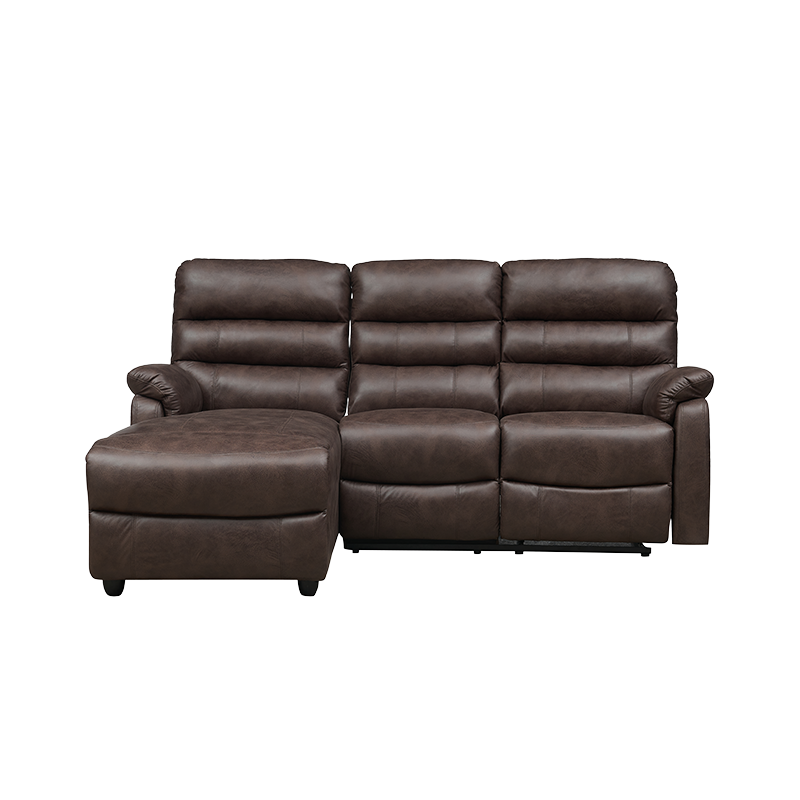
Understanding the Core Mechanisms
Both sofa types maximize seating capacity in corner configurations, but their operational foundations differ significantly. Manual versions rely on body weight and lever systems to extend footrests or recline backs. Electric models integrate motor-driven actuators controlled via buttons, remotes, or smartphone applications.
Manual Sofa Operation
Manual corner sofas typically employ a push-back mechanism or side-mounted lever. Users apply backward pressure against the backrest while pushing on the armrests to achieve recline positions. Footrests extend through a cable-and-spring system activated by a pull-tab located between the seat cushion and armrest.
Electric Sofa Technology
Electric corner sofas utilize low-voltage DC motors, typically operating at 24-29 volts for safety. Linear actuators convert rotational motor movement into precise linear motion, allowing infinite positioning between fully upright and fully reclined states. Power consumption remains minimal, averaging 10-15 watts during adjustment and zero draw when static.
Cost Analysis: Initial Investment and Long-Term Value
Price differentiation between manual and electric corner sofas extends beyond the purchase price to encompass installation, maintenance, and operational costs over a typical 10-15 year furniture lifespan.
| Cost Factor | Manual Corner Sofa | Electric Corner Sofa |
|---|---|---|
| Average Purchase Price | $800 - $1,800 | $1,500 - $4,000 |
| Professional Installation | $0 - $100 | $100 - $300 |
| Annual Maintenance | $0 - $25 | $50 - $150 |
| Power Consumption (10 years) | $0 | $15 - $30 |
| Major Repair (motor/actuator) | N/A | $200 - $500 |
| Total 10-Year Cost | $800 - $2,050 | $1,765 - $4,980 |
While electric models command higher upfront investment, their precision positioning can reduce physical strain-related healthcare costs for users with mobility limitations. Manual sofas eliminate electronic failure risks entirely, offering predictable durability in high-use family environments.
Ergonomics and Health Implications
The capacity to achieve precise reclining angles directly impacts spinal health and circulation. Electric corner sofas provide infinite adjustability, typically offering 110 to 160 degrees of backrest articulation in single-degree increments. Manual versions generally lock into two to three preset positions, limiting customization.
Zero-Gravity Positioning
Premium electric corner sofas often include zero-gravity presets, elevating legs above heart level to reduce spinal compression and improve venous return. NASA research indicates this position minimizes disc pressure to 90-120 mmHg compared to 200+ mmHg in standard seated postures. Manual sofas rarely achieve true zero-gravity angles due to mechanical limitations.
Accessibility Considerations
For users with arthritis, limited upper body strength, or post-surgical mobility restrictions, electric operation eliminates the 15-25 pounds of force typically required to activate manual recline mechanisms. The smooth motor-driven motion also reduces shear forces on sensitive joints during position transitions.
Durability and Maintenance Realities
Mechanical simplicity favors manual sofas in longevity assessments, though electric components have improved significantly in recent years.
Manual Sofa Lifespan
Manual recline mechanisms contain no electrical components vulnerable to power surges or motor burnout. High-quality lever systems withstand 50,000+ cycles before requiring adjustment. Primary failure points include spring fatigue and cable stretching, both inexpensive repairs typically costing under $50 in parts.
Electric Component Reliability
Modern electric sofa motors carry ratings of 20,000-30,000 cycles, translating to approximately 10-15 years of average household use. However, power supply units and control boards remain vulnerable to electrical grid fluctuations. Battery backup systems, available on premium models, mitigate power outage inconveniences but require annual replacement at $30-60 per battery pack.
Space and Placement Requirements
Both sofa types demand specific spatial considerations beyond their footprint dimensions.
Power Access for Electric Models
Electric corner sofas require proximity to grounded electrical outlets. Most models need one outlet per reclining seat, though some support daisy-chain connections reducing outlet requirements. Cord management systems hide wiring within the frame, but placement flexibility remains constrained by outlet locations unless professional electrical work extends circuits.
Wall Clearance Specifications
Manual recliners typically require 12-18 inches of wall clearance to accommodate backrest recline arcs. Electric models with wall-hugger technology reduce this requirement to 4-6 inches, maximizing usable floor space in compact living areas. This spatial efficiency can reclaim 10-15 square feet of floor area in typical installations.
Feature Comparison: Beyond Basic Reclining
Electric corner sofas increasingly integrate smart home features unavailable in manual alternatives.
- USB charging ports integrated into armrests
- Programmable memory positions for individual users
- LED ambient lighting and under-seat illumination
- Heated seat elements with adjustable temperature zones
- Adjustable lumbar support with air bladder or mechanical systems
- Voice control integration with Alexa or Google Home
Manual corner sofas focus purely on mechanical function, though some premium models offer manual lumbar adjustment wheels or swiveling bases. The absence of electronic features reduces potential failure points but limits customization options.
Environmental and Energy Considerations
Sustainability-conscious buyers should evaluate both manufacturing impact and operational energy use.
Manufacturing Footprint
Electric sofas require additional raw materials including copper wiring, circuit boards, rare earth magnets for motors, and plastic housings. This increases embodied carbon by approximately 15-20% compared to equivalent manual models. However, both types utilize similar frame materials, foam densities, and upholstery fabrics, minimizing differential impact in these major component categories.
Operational Energy Use
Annual electricity consumption for a three-seat electric corner sofa averages 2-4 kWh, equivalent to operating a LED television for 20-40 hours. This negligible operational impact becomes irrelevant if the sofa replaces separate recliners and lighting fixtures through integrated features.
Decision Framework: Matching Sofa Type to Lifestyle
Selecting between manual and electric corner sofas requires honest assessment of usage patterns, household composition, and long-term housing plans.
Choose Manual Corner Sofas If:
- Budget constraints limit spending to under $1,500
- Rental properties prohibit electrical modifications
- Household members possess full mobility and upper body strength
- Frequent power outages characterize your region
- Minimalist aesthetic preferences reject visible technology
Choose Electric Corner Sofas If:
- Daily reclining use exceeds 3 hours
- Household includes elderly users or individuals with mobility limitations
- Space constraints demand wall-hugger technology
- Smart home integration enhances your lifestyle
- Long-term residence justifies higher initial investment
Final Recommendations
Neither manual nor electric corner sofas represent objectively superior choices. Electric models justify premium pricing for users prioritizing ergonomic precision, accessibility, and technological integration. Manual alternatives deliver equivalent core comfort with superior reliability and cost efficiency.
For multi-generational households, consider hybrid configurations: electric reclining seats for elderly users paired with manual sections for children and budget-conscious areas. This approach balances accessibility needs with cost management, ensuring every family member enjoys appropriate comfort without overspending on rarely used features.
Prioritize frame construction quality and high-density foam regardless of mechanism type. A well-built manual sofa outperforms a poorly constructed electric model in both comfort and longevity. Test both mechanisms in showroom environments, paying attention to noise levels, transition smoothness, and intuitive control placement before committing to either technology.
LET'S TALK

Bai Shuiwan Industrial Park, Tian Huangping Town, Anji County, Huzhou City, Zhejiang Province, China
More About Us 
-
+86 18257273741
-
[email protected]
CONTACT US
Copyright © Anji Xuanbo Household Co., Ltd. All Rights Reserved.
Custom Modern Upholstered Sofa Manufacturers


