Focus on the manufacturing and export of functional sofas
-
 +86 18257273741
-
 [email protected]

 English
 Español
Industry News
 Home / News / Industry News / Manual vs. Power Electric Recliners: Which Mechanism Is More Durable for Heavy B2B Use?
 Manual vs. Power Electric Recliners: Which Mechanism Is More Durable for Heavy B2B Use?
 2026.09.21
 Industry News
Content
- 1 How Manual and Power Recliners Are Engineered Differently
- 2 Key Durability Factors in Heavy-Duty Recliners
- 3 Manual vs. Power Durability: A Side-by-Side Comparison
- 4 Total Cost of Ownership and Maintenance in B2B Orders
- 5 How to Vet Recliner Durability Before Placing a Bulk Order
- 6 Matching the Mechanism to Your B2B Application
- 7 Frequently Asked Questions
Buyers who source recliners for hotels, assisted-living facilities, home theater projects, or retail programs quickly learn one rule: in heavy B2B use, the mechanism is the deciding factor. A chair that feels comfortable in a showroom can fail within months when operated dozens of times a day across hundreds of units. This guide compares manual and power electric recliners specifically on durability, so purchasing teams and importers can specify the right system with confidence.
How Manual and Power Recliners Are Engineered Differently
A manual recliner is a purely mechanical product. The user pushes back against the backrest to extend the footrest, or pulls a side lever that releases a spring-loaded mechanism. The core components are steel rails, torsion springs, hinges, and locking hooks, with no motor, no wiring, and no control board.
A power electric recliner uses a low-voltage DC motor and a linear actuator to move the backrest and footrest. A button or remote sends a signal to the controller, and the actuator extends or retracts at a steady speed. In this design, the actuator and controller carry the workload that a manual chair assigns to steel rails and springs.
Manual mechanism
- Low part count
- Failures easy to diagnose
- Lower spare-parts cost
Power mechanism
- Smooth remote positioning
- Extra electronic components
- Higher spare-parts budget
Key Durability Factors in Heavy-Duty Recliners
Frame and suspension
Mechanism type is only part of the story. A recliner is only as durable as its frame. In B2B orders, specify kiln-dried hardwood or engineered hardwood frames with reinforced corner blocks, and seat suspension designed for repeated loading. Manual mechanisms transfer more impact force to the frame because users push back harder, while power mechanisms apply steadier force. Either way, the frame, not the motor, sets the lifespan ceiling.
Mechanism complexity and failure points
Fewer parts generally mean fewer failures. A manual mechanism contains a handful of springs, rivets, and rails, and a technician can usually find a worn part within minutes. A power mechanism adds a motor, a controller, and wiring harnesses. Every additional connection is a potential failure source, particularly in humid climates or when chairs are moved between rooms.
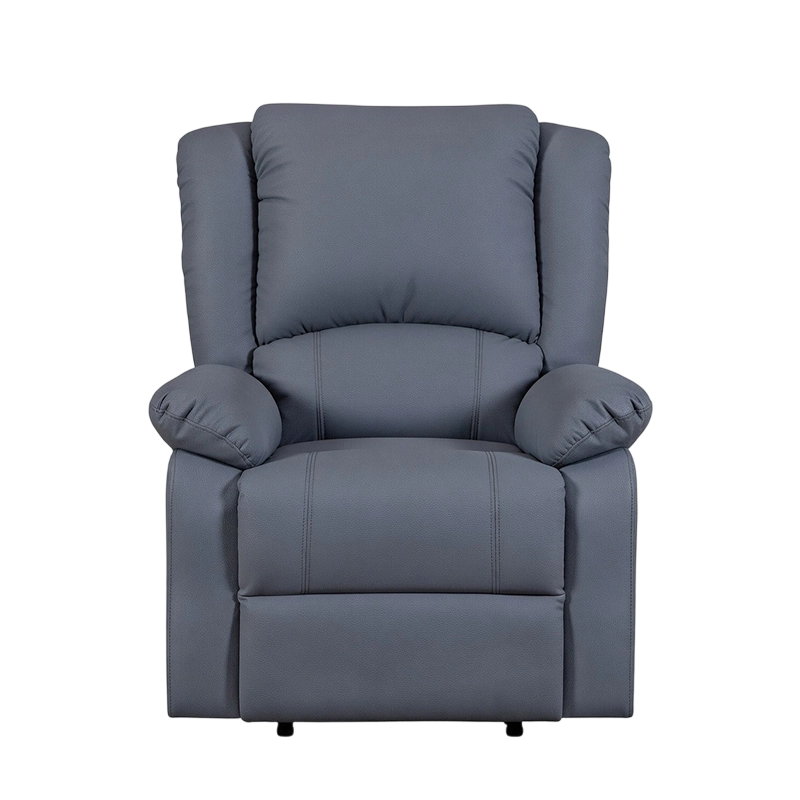
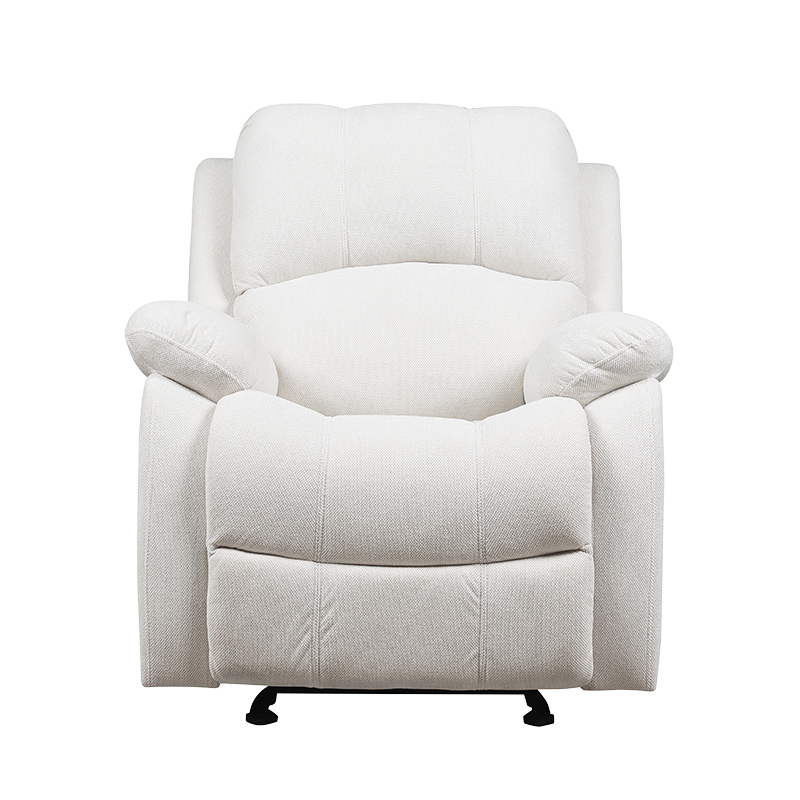
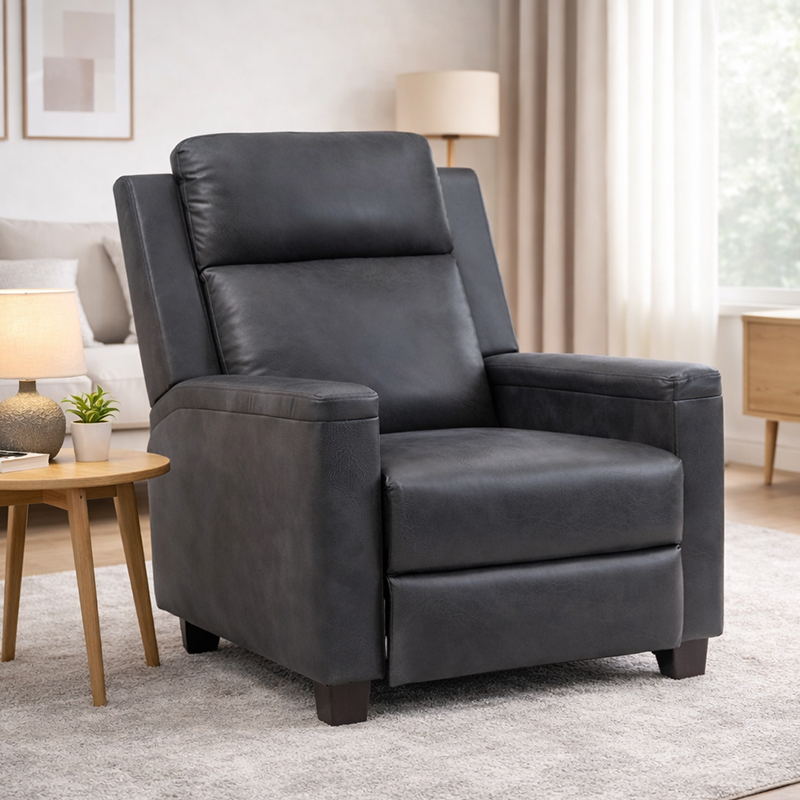 Genuine Leather Push Back Recliner with Solid Wood LegsThis manual recliner offers three adjustable positions with a simple push-back mechanism, eliminating motor-related failures. Its high backrest and plush cushioning suit relaxed reading or entertaining while the solid wood legs ensure stability.View Product →
Motor and electrical components
Electric recliners are not all built to the same standard. In heavy-use environments, the actuator should be rated for the load and duty cycle, and the wiring should match the voltage standards of the destination market. Look for recognized actuator brands and compliance marks such as UL or CE when importing into North America or the EU. Sourcing a motor with a proven track record reduces after-sales problems significantly.
Manual vs. Power Durability: A Side-by-Side Comparison
Here is how the two mechanisms measure up in the durability categories that matter for B2B orders.
| Durability Factor | Manual Recliner | Power Electric Recliner |
|---|---|---|
| Mechanism complexity | Low, with few moving parts | Moderate, with motor and wiring |
| Main failure points | Springs and locking rails | Actuator and controller |
| Typical maintenance | Lubricate and replace springs | Swap actuator or motor |
| Operator effort | Higher push-back force | Minimal, via remote |
| Power outage behavior | Fully functional | Stops without electricity |
| Planned spare-part stock | Low | Moderate to high |
Read another way: the frame determines the ceiling of a recliner's life, and the mechanism determines the floor. Both types can last for years if the steel and construction are good, and both can fail early if the components are cheap. For a broader view that also covers lift chairs, see our full comparison of manual, electric, and lift mechanisms.
Total Cost of Ownership and Maintenance in B2B Orders
Unit price is not the full cost. Manual recliners are cheaper to source, and their spare parts are inexpensive: springs, rails, and rivets cost little and require basic tools to replace. Power recliners demand a higher initial price and a more complicated spare-parts chain, with actuators, controllers, remotes, and power supplies to be stocked in the after-sales warehouse.
For a hospitality project with two hundred electric units, the spare-parts budget quickly becomes real money. Modular power systems help here: a technician can replace a failed actuator in minutes without disassembling the upholstery. When requesting quotes, ask how spare kits are packed, what the warranty and after-sales terms are, and whether replacement components ship from a regional warehouse.
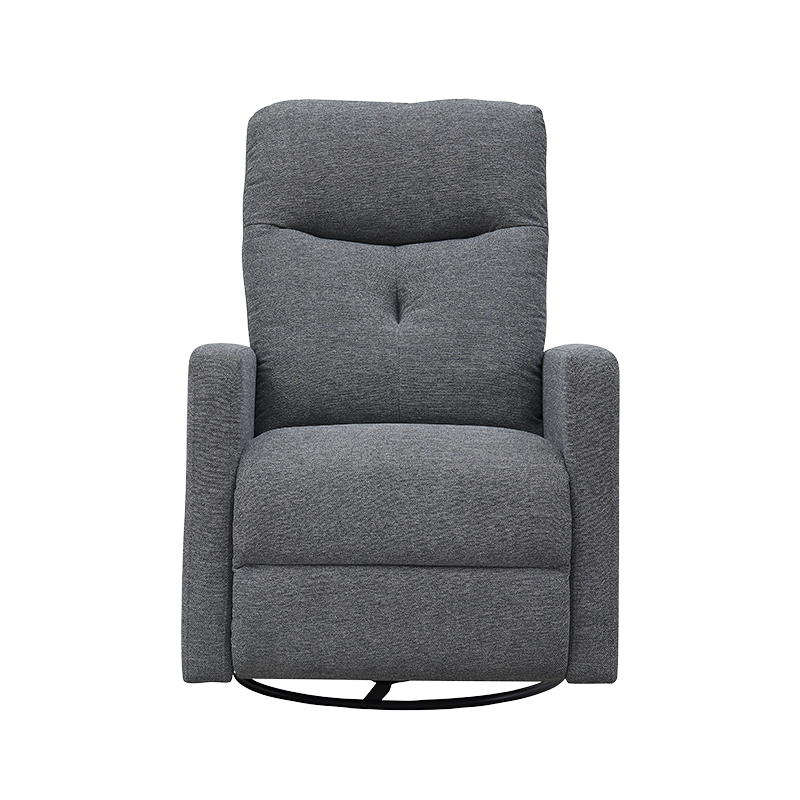
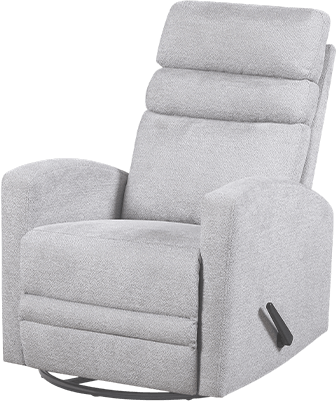
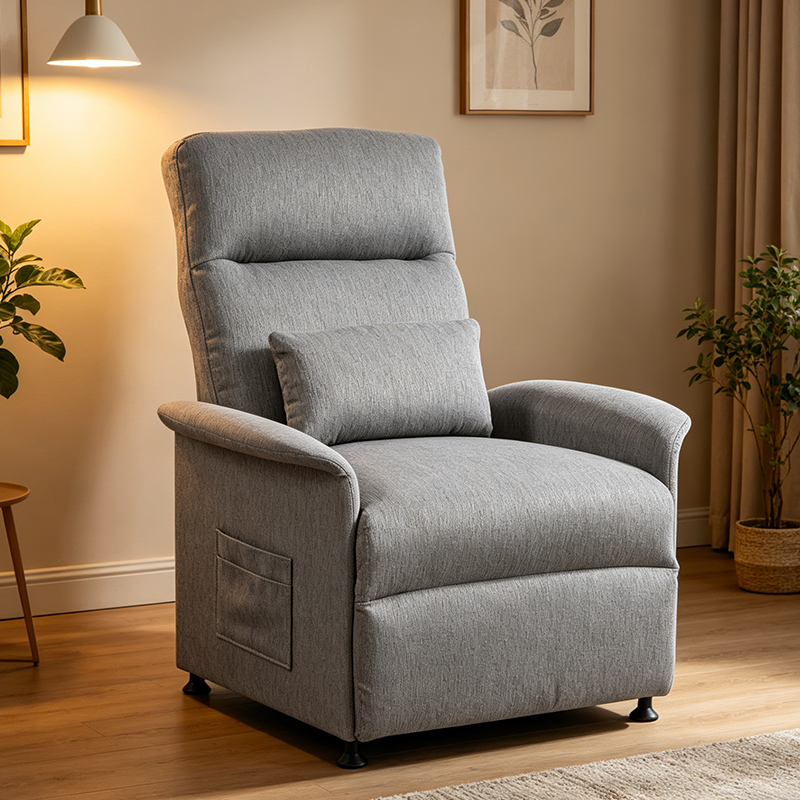 Remote-Controlled Power Recliner with Quiet Electric AdjustmentEasily recline from 90° to 150° using the included remote, with smooth, noise-reduced motion. The cushioned armrests and high-density sponge add comfort, while the modular design simplifies maintenance and spare-part replacement for high-use settings.View Product →
A practical detail for North American buyers: confirm whether the chair ships with a US plug or an unassembled cord set, and check the UL documentation before the container leaves the factory.
How to Vet Recliner Durability Before Placing a Bulk Order
The fastest way to predict durability is to inspect what you cannot see. Use this checklist when evaluating a supplier.
- Frame: hardwood or engineered hardwood, with corner blocks and reinforced joints.
- Mechanism: steel gauge, spring quality, actuator brand, and rated cycles.
- Foam: high-density or high-resilience foam in the seat and back cushions.
- Upholstery: abrasion resistance for fabrics, or leather grade and thickness.
- Testing: cycle-testing reports that follow BIFMA or EN standards.
- Electrical: motor certifications, voltage compatibility, and plug type.
- Spare parts: lead times, packaging, and warranty conditions.
We apply the same standard at our own factory: buyers are welcome to review how the frame and foam are produced before committing to an order. You can find more about that setup on our about page. Whatever supplier you choose, make the same demands in writing.
Matching the Mechanism to Your B2B Application
Hospitality and home theater
Power recliners dominate cinema-style spaces because guests can adjust positions with a remote and the motion is smooth. The buying focus should be on actuator rating, power supply planning, and heat dissipation when many chairs run on the same circuit.
Healthcare and senior living
Heavy-duty power lift recliners are the preferred specification in senior care because the mechanism helps users stand safely. Durability here includes weight capacity and a lift actuator that is oversized for frequent cycles. The motor lifts both the user and the chair, so robust construction pays off in service life.
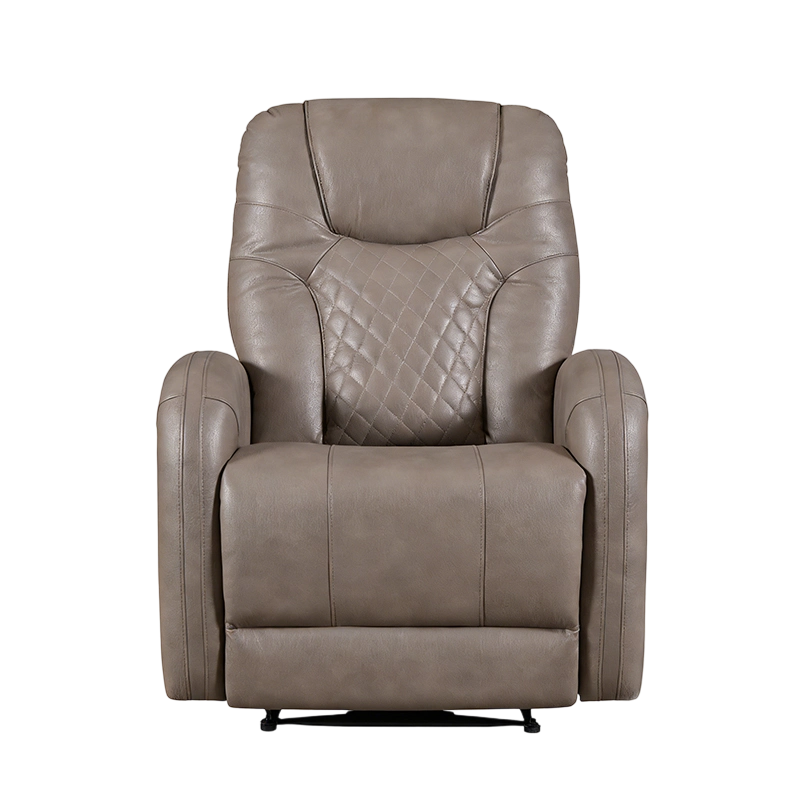
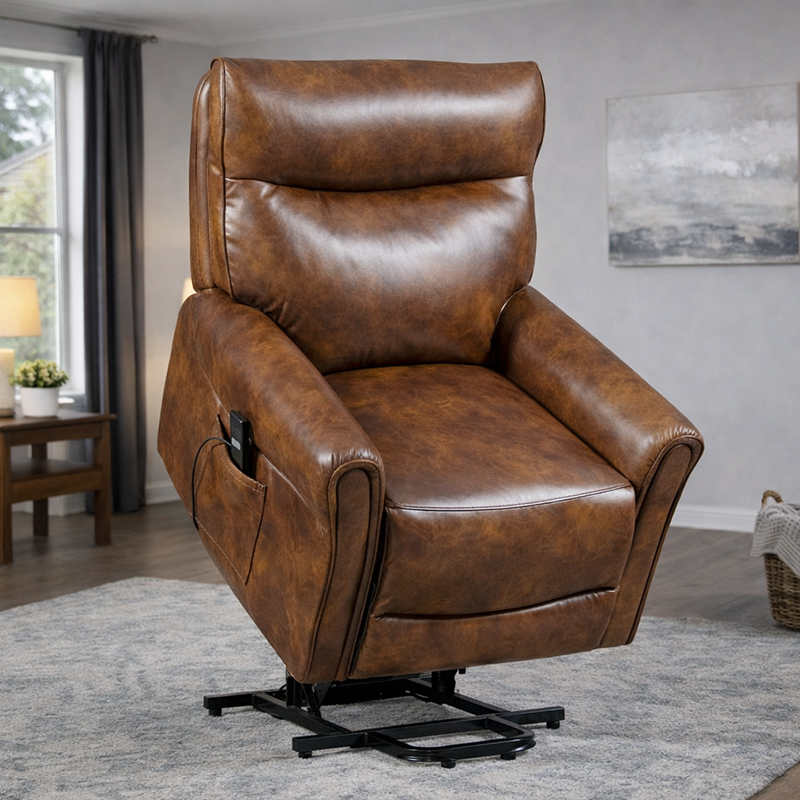 Power Lift Recliner for Elderly with Overstuffed CushioningDesigned for senior care, this electric lift chair gently raises users to a near-standing position, reducing strain when sitting or standing. Breathable leather, pocket springs, and a side pocket combine comfort and convenience for daily use.View Product →
Retail and residential wholesale
For wholesale programs aimed at consumers, mechanism reliability shows up in warranty claims. Manual recliners are strong sellers in price-sensitive markets because there is no motor to fail. Power models earn their place when the retail story is about comfort and accessibility, but they require a higher spare-parts and returns allowance.
Frequently Asked Questions
Are manual recliners more durable than power electric recliners?
In most cases, yes, because a manual mechanism has fewer components and no electronics. That said, a weak manual mechanism can fail faster than a well-built actuator. Frame quality and steel thickness matter more than the mechanism category alone.
What fails most often on a heavy-duty power recliner?
The linear actuator and its limit switches are the most common failure points, followed by wiring connections and the remote control. Reinforcement of the actuator mounting bracket and protected wiring harnesses reduce these failures in production.
How long can a commercial recliner last in daily use?
With annual service, a good manual mechanism often outlasts the upholstery. For power mechanisms, hotel and home theater environments typically see 8 to 10 years of service life with periodic motor maintenance; continuous care settings can wear motors faster.
Do power recliners work during a power outage?
Standard power recliners cannot operate without electricity. Some models include a battery backup so the chair can return to an upright position during an outage. If this matters for your project, specify it at the ordering stage.
There is no universal winner in the manual versus power durability debate. Manual mechanisms win on simplicity, predictable repairs, and low spare-parts cost. Power mechanisms win on accessibility, comfort, and the premium experience buyers expect in hospitality and care settings. Let the application decide, then specify the frame, mechanism, foam, and motor quality in the contract. In heavy B2B use, durability is a specification decision before it is a performance outcome.
LET'S TALK

Bai Shuiwan Industrial Park, Tian Huangping Town, Anji County, Huzhou City, Zhejiang Province, China
More About Us 
-
+86 18257273741
-
[email protected]
CONTACT US
Copyright © Anji Xuanbo Household Co., Ltd. All Rights Reserved.
Custom Modern Upholstered Sofa Manufacturers


