Focus on the manufacturing and export of functional sofas
-
 +86 18257273741
-
 [email protected]

 English
 Español
Industry News
 Home / News / Industry News / Custom Recliner Chair Manufacturing: Materials, Mechanisms & Sourcing Guide
 Custom Recliner Chair Manufacturing: Materials, Mechanisms & Sourcing Guide
 2026.09.17
 Industry News
Content
The recliner market has moved far beyond the oversized, one-style-fits-most furniture of the past. Retail buyers, importers, and e-commerce brands now look for motion furniture that fits a specific room dimension, matches a local design trend, and answers a particular comfort need, such as lower-back support or easier standing assistance. This shift is exactly why custom recliner chair manufacturing has become a core capability for serious furniture suppliers.
For a furniture brand, a custom program means exclusive products, sharper pricing, and a catalog that competitors cannot copy from a showroom photo. This guide explains the main customization layers, how a typical order develops from drawing to delivery, and what to check when evaluating a recliner chair factory for your next project.
What Does "Custom Recliner Chair" Mean for a Manufacturer?
Customization in furniture manufacturing goes far beyond choosing a fabric color. When a factory refers to a custom recliner chair, it usually means the product is developed according to the buyer’s specification across several key components:
A custom program can be as simple as changing an existing model’s cover and adding a feature, or as complex as developing a completely new frame from your drawing or sample. For the buyer, the value is clear: exclusive SKUs, better margins, and a product line that reflects the brand instead of the factory’s default catalog.
Core Customization Options for Recliner Chairs
A practical way to plan a custom project is to decide layer by layer, starting with the structure that supports the body and moving outward to the surface and the features.
Frame and Mechanism
The mechanism is the heart of a recliner. Manual push-back recliners rely on body weight and a spring-assisted steel frame, which keeps the bill of materials low and the operation simple. Electric recliners use a motor and remote control, letting users adjust the backrest and footrest at the touch of a button. Lift chairs tilt the entire seat forward so elderly or mobility-limited users can stand up without strain. Each mechanism changes the frame, foam layering, and the clearance space required behind the chair. If you are deciding between manual and powered motion, our comparison guide covers the differences in detail.
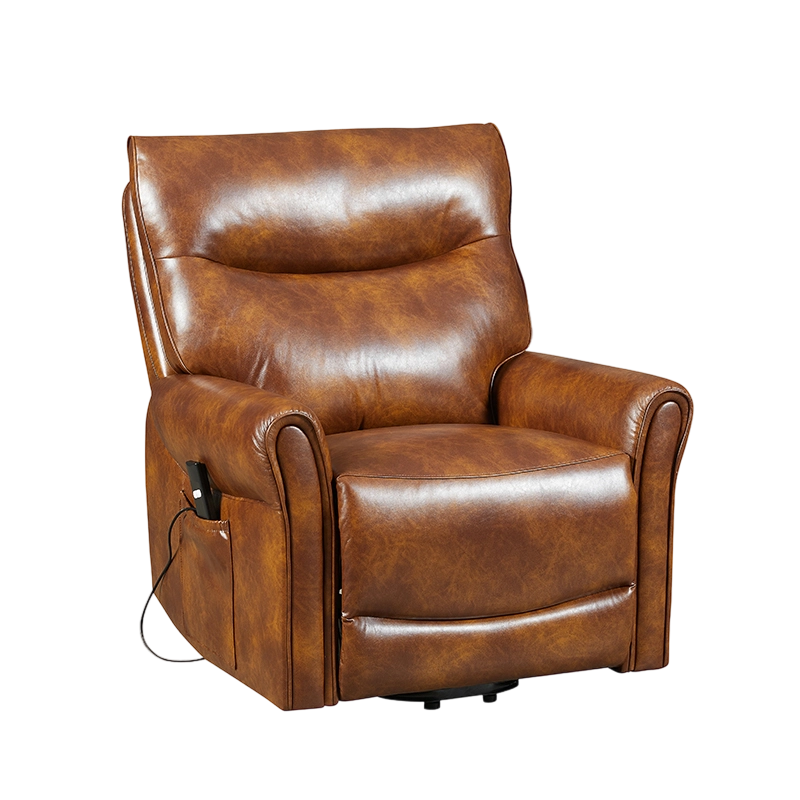
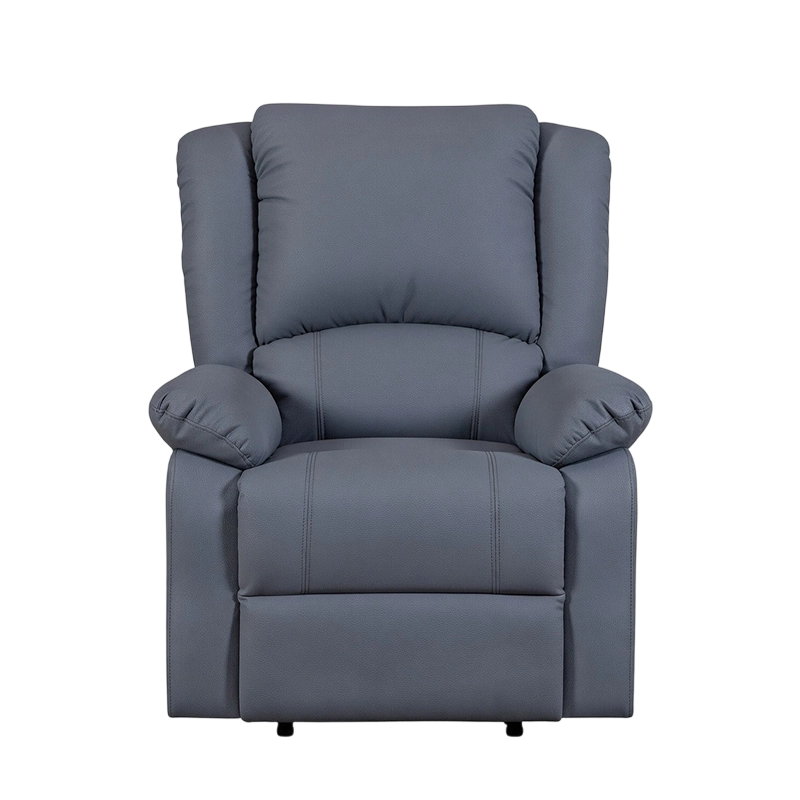
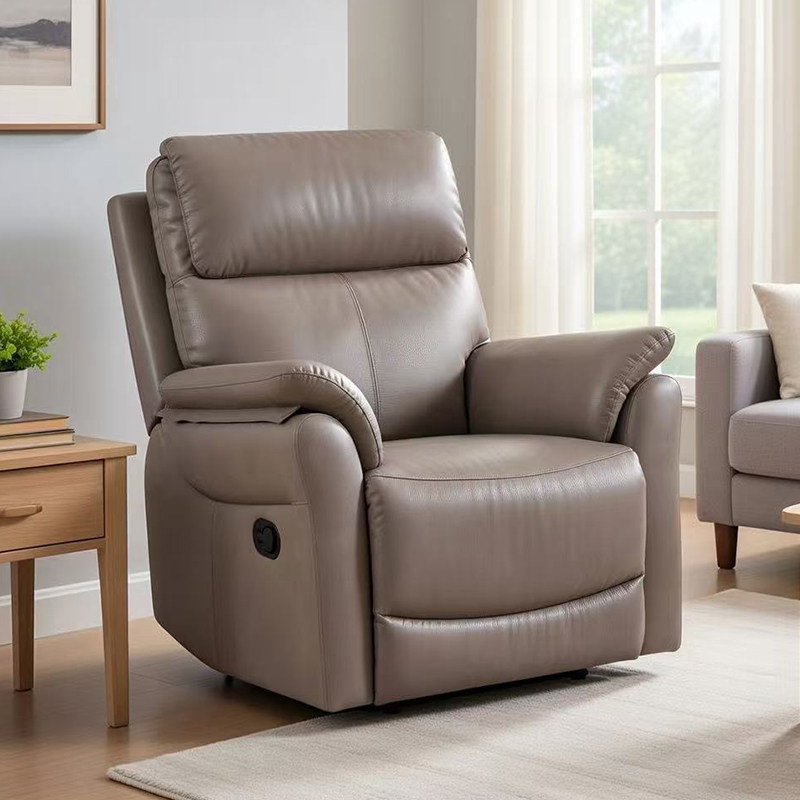 Manual Leather Recliner with Rolled Arms and Tab-Pull MotionThis manual recliner pairs leather-touch surfaces with high-density foam and pocket coils, offering straightforward tab-pull adjustment. It suits buyers comparing spring-assisted mechanisms and seeking a durable, transitional-style chair for living spaces.View Product →
| Mechanism | How It Works | Typical Use | Custom Notes |
|---|---|---|---|
| Manual push-back | Body-weight driven | Living rooms, budget lines | Fewer parts, lower cost, easy servicing |
| Electric recliner | Motor plus remote or USB control | Home theaters, premium lounges | Motor power, wiring, transformer options |
| Power lift chair | Full-seat forward assist | Elderly care, mobility support | Extra-wide frame, higher weight capacity |
Upholstery, Filling, and Comfort
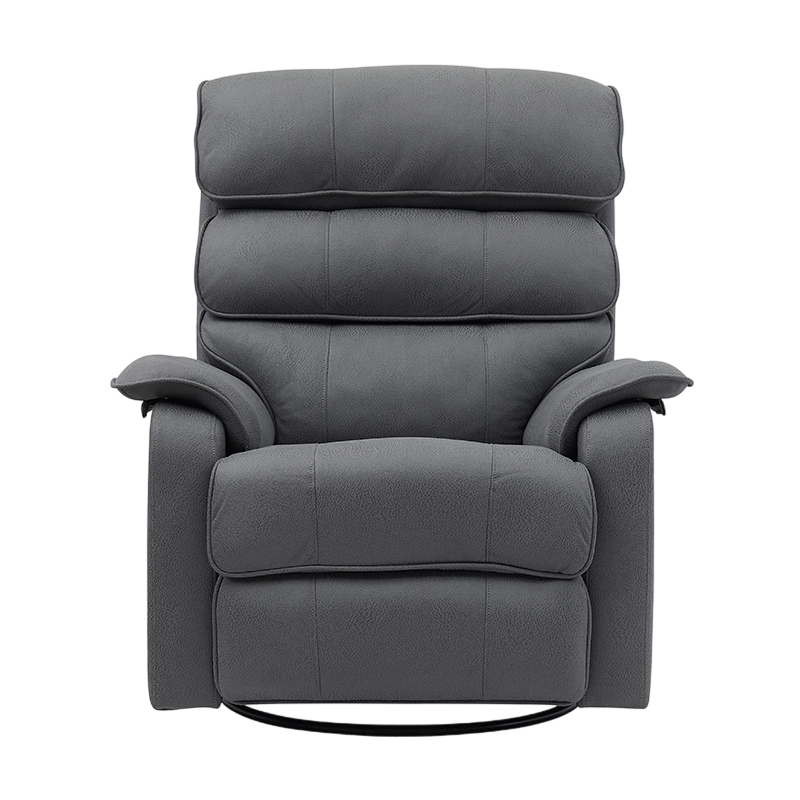
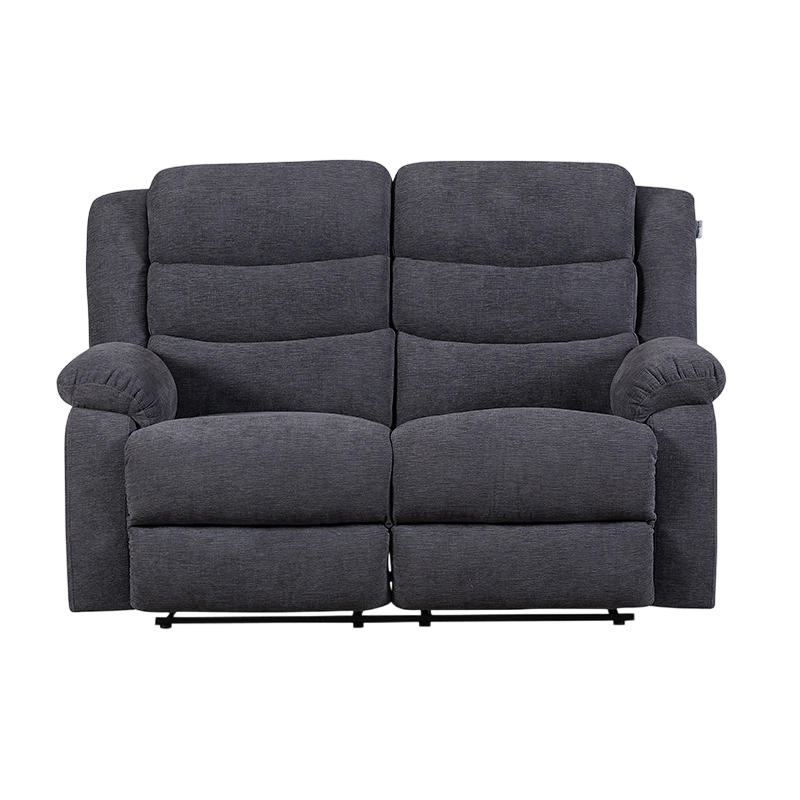
Once the frame is defined, the next layer is the surface and the padding beneath it. Buyers can select leather, durable faux leather, breathable fabric, chenille, velvet, or microfiber, depending on the target climate and care expectations. Comfort, however, is engineered from the inside. High-density sponge provides longer-lasting support, overstuffed arms create a plush feel, and lumbar support or padded headrests address specific ergonomic needs. A custom spec sheet should state foam density, fill layers, and where the softness should be increased or reduced.
Size, Proportion, and Fit
Recliner chairs no longer come in one standard silhouette. Factories can adjust overall width, seat height, seat depth, and backrest angle to produce compact single seats for small apartments, oversized lounge chairs for spacious family rooms, or theater-style seating with uniform dimensions. Our catalog, for example, includes recliner widths from about 29.9 inches to 39.8 inches, and custom projects can extend that range in either direction.
Power, Features, and Mobility Aids
Additional features define the final price point and retail story. USB charging ports, remote controls, cup holders, side storage consoles, swivel and rocker bases, massage, heat, and vibration are among the most requested options for custom power recliners.
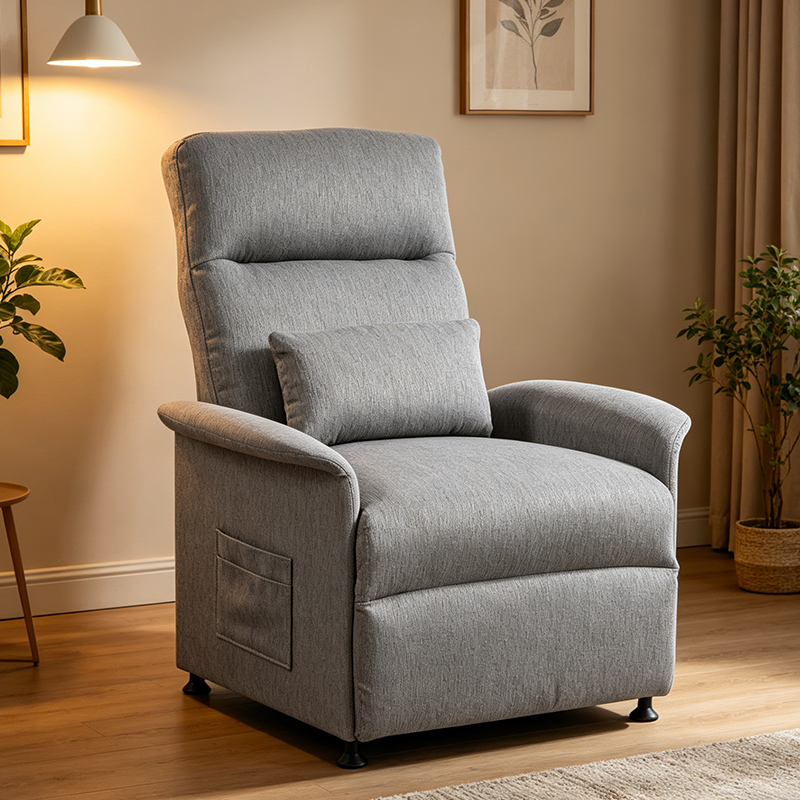 Electric Power Recliner with Remote Control and Quiet MotorThis power recliner adjusts smoothly from upright to a 150-degree recline via a handheld remote, supported by high-density sponge and cushioned armrests. It’s a practical option for those exploring motorized comfort and easy positioning.View Product →
Power lift chairs are another fast-growing category. They combine a powered tilting frame with extra-wide seats, heavy-duty construction, and optional massage or heating, making them a practical choice for elderly users and care-oriented product lines. Once you have a clear feature list, the factory can quote and sample the product much faster.
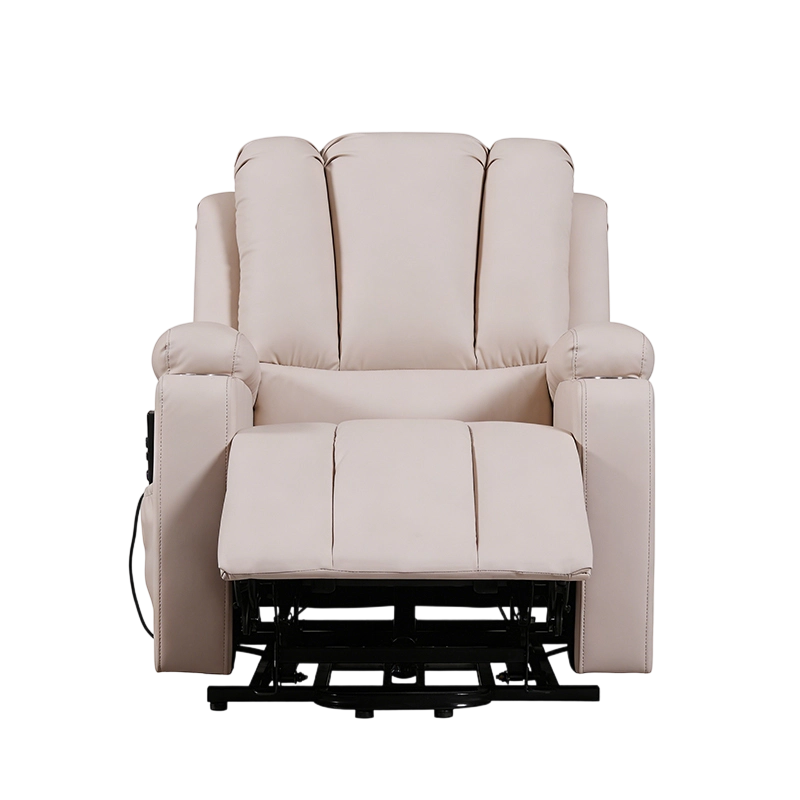
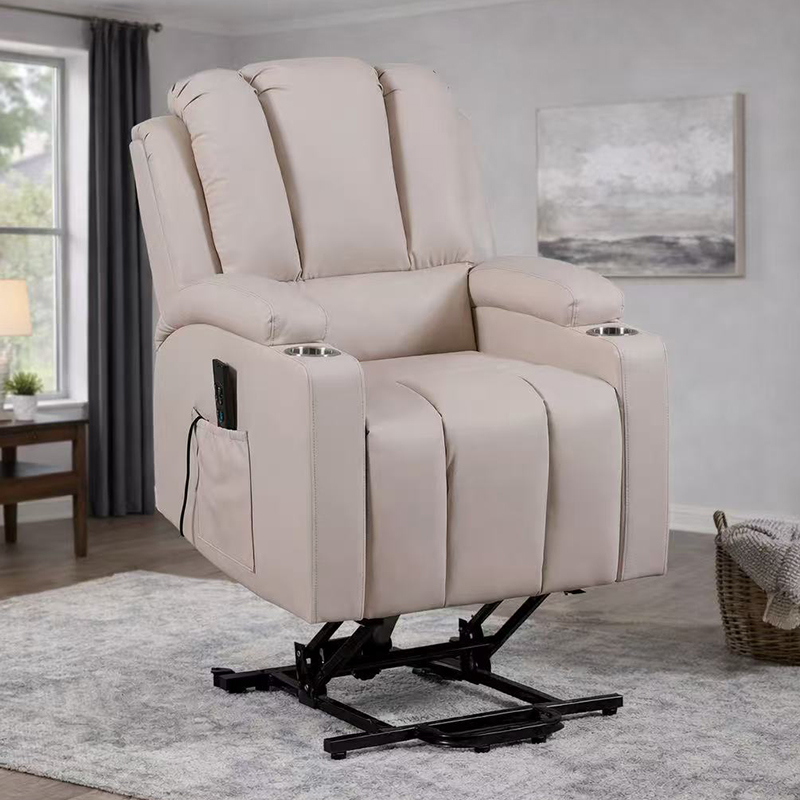 Extra-Wide Power Lift Recliner for Elderly with Wired ControllerThis lift chair combines a silent electric motor with a wired side-pocket controller, enabling smooth recline and standing assistance. Its overstuffed padding and solid metal frame address comfort and stability for older users or those with mobility needs.View Product →
From Drawing to Delivery: How Custom Recliner Orders Work
A structured process keeps custom projects predictable. Most recliner chair factories follow a sequence similar to this:
- Requirement analysis: share your target market, price range, reference photos, and any drawings you have.
- Quotation and feasibility: the factory recommends frame, foam, fabric, and mechanism options, then returns a preliminary price.
- Sample development: a pre-production sample is built based on your drawing or reference. This is the stage where dimensions and comfort are fine-tuned.
- Material confirmation: leather, fabric, foam, accessories, and color standards are locked and approved.
- Mass production: once the sample is approved and quality expectations are documented, the order moves into production.
- Inspection and shipment: finished chairs are inspected, packed, and loaded, usually as sea freight.
- 8,000 m² factory floor
- 100+ employees
- 3 hours to Shanghai and Ningbo ports
- In-house frame and foam plants
Location plays a larger role in custom recliner sourcing than many buyers expect. Anji, where our 8,000-square-meter factory operates, is one of China’s major chair manufacturing hubs and sits about three hours from both Shanghai Port and Ningbo Port. That short inland distance simplifies container loading and helps keep lead times predictable. Because we run our own wood frame workshop and sponge processing line, we also control the two most cost-heavy parts of a recliner chair, which matters when buyers ask for structural changes or higher-density foam.
What to Look for in a Custom Recliner Chair Factory
Not every sofa factory can handle a true custom recliner chair program. Before committing to your first order, evaluate the supplier on these five points:
- In-house frame and foam production: reduces component cost, shortens lead time, and makes size changes easier to implement.
- Export experience with recliner categories: shipping bulky recliner cartons to North America, Europe, and the Middle East requires mature packaging and freight experience.
- Flexible order sizes: a suitable factory discusses minimum quantities per model rather than applying one rigid MOQ to everything.
- Design and sampling capacity: the ability to build a sample from a drawing or reference product is the core of custom work.
- After-sales support: agree on warranty terms, spare motors, adapters, and mechanism parts before placing the order.
Our own background and production setup can be reviewed on our company overview page. For any custom recliner chair project, a factory visit or a detailed virtual meeting is still the best way to confirm that the supplier can deliver exactly what your brand promises.
Frequently Asked Questions
Q1: What is the MOQ for custom recliner chairs?
MOQ depends on the complexity of the design and the materials selected. For existing models with small changes, we can be flexible. For completely new frames, a higher initial quantity helps cover tooling and sampling costs. Send your specifications and target price to our team for a project-based quotation.
Q2: Can I combine manual and electric recliners in one shipment?
Yes. Because we produce both manual and electric recliner lines in the same factory, mixed containers with different mechanisms are common and easy to plan. This gives buyers the flexibility to test multiple price points in a single market.
Q3: How long does a custom recliner sample take?
Timing depends on whether the sample evolves from an existing frame or starts from a new design. Modifying an available model is fastest, while a brand-new structure requires more engineering and testing. We recommend starting the sampling discussion as early as possible in your buying calendar.
Q4: Do you support private labels, logos, and custom packaging?
Yes. Our OEM/ODM service covers custom logos, labels, user manuals, cartons, and other packaging according to your retail plan. These details are confirmed during the sample stage so that mass production runs without surprises.
LET'S TALK

Bai Shuiwan Industrial Park, Tian Huangping Town, Anji County, Huzhou City, Zhejiang Province, China
More About Us 
-
+86 18257273741
-
[email protected]
CONTACT US
Copyright © Anji Xuanbo Household Co., Ltd. All Rights Reserved.
Custom Modern Upholstered Sofa Manufacturers


