Focus on the manufacturing and export of functional sofas
-
 +86 18257273741
-
 [email protected]

 English
 Español
Industry News

Corner Sofa Buying Guide: How to Choose the Right Fit
 2026.07.17
 Industry News
Content
- 1 The Complete Corner Sofa Buying Guide
- 2 01Corner Sofa vs. Sectional Sofa
- 3 02How to Choose a Corner Sofa
- 4 03Left Hand vs. Right Hand Corner Sofa
- 5 04Corner Sofa Size Guide
- 6 05Corner Sofa for Small Living Rooms
- 7 06Modular Corner Sofa
- 8 07Corner Sofa Bed and Corner Sofa with Storage
- 9 08Fabric vs. Leather Corner Sofa
- 10 09Frame Construction and Cushion Fill
- 11 10Corner Sofa Care and Maintenance
- 12 11Common Corner Sofa Buying Mistakes
- 13 12Final Buying Checklist
Living Room Furniture
The Complete Corner Sofa Buying Guide
A corner sofa can transform how a living room feels and functions — but getting the shape, size, materials, and orientation right is a bigger decision than most furniture purchases. This guide walks through everything from sectional terminology to frame construction, so you can buy with confidence and avoid the most common corner sofa mistakes.
Quick Answer
A corner sofa is an L-shaped sectional built to fit a room's corner. Choosing one comes down to five decisions: orientation (left or right hand), overall size relative to your room, upholstery material, frame and cushion construction, and whether you need added features like a pull-out bed or storage. The sections below cover each in detail.
01Corner Sofa vs. Sectional Sofa
The terms are often used interchangeably, but a corner sofa specifically refers to an L-shaped piece designed to fit into a room's corner, while sectional sofa is a broader category that also includes U-shaped, curved, and multi-piece configurations. Every corner sofa is technically a sectional, but not every sectional is a corner sofa.
This distinction matters for space planning. A corner sofa is built around using a room's corner efficiently — one arm runs along one wall, the other along the adjoining wall, with the chaise or corner section filling the angle between them. Larger U-shaped or curved sectionals typically need more open floor space and aren't designed with a specific corner placement in mind, which makes them a poor fit for smaller or more enclosed rooms.
02How to Choose a Corner Sofa
ShapeLeft or right-hand orientation
SizeFits room without blocking flow
MaterialFabric or leather for your lifestyle
FrameHardwood vs. engineered wood
Beyond shape and size, think about how the sofa will actually be used day to day. A household with kids or pets typically prioritizes durable, easy-clean fabric and a firmer cushion fill that resists sagging. A formal or lower-traffic living room may prioritize leather's clean look, or a softer down-blend cushion that favors comfort over long-term shape retention. It also helps to think about how the sofa will be delivered — corner sofas are large, and not every configuration fits through every doorway or up every staircase.
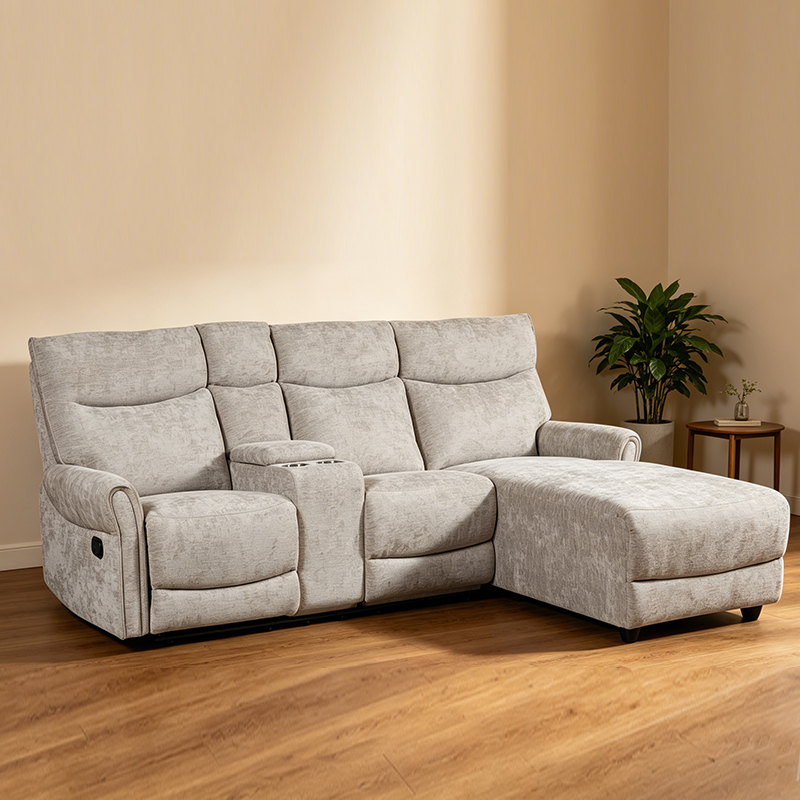
03Left Hand vs. Right Hand Corner Sofa
| Orientation | Chaise Position | Best Fit |
|---|---|---|
| Left-hand facing | Chaise extends to the left when facing the sofa | Rooms where the open wall or window is on the left |
| Right-hand facing | Chaise extends to the right when facing the sofa | Rooms where the open wall or window is on the right |
Left-hand and right-hand corner sofa orientation, defined by chaise position when facing the sofa.
Getting the orientation wrong is one of the most common corner sofa buying mistakes, since it can block a walkway, face the seating away from a TV or focal point, or crowd a doorway. Before ordering, tape out the sofa's footprint on your floor with painter's tape in both orientations and walk through the space — this catches layout problems that are easy to miss on paper.
04Corner Sofa Size Guide
Corner sofas are measured by overall depth and length along each arm, and getting this right against your room dimensions prevents the sofa from overwhelming the space or leaving too little walking room. As a general guide, leave at least 30-36 inches of clearance around the sofa for comfortable movement, and measure doorways, hallways, and stairwells to confirm the piece can actually be delivered into the room — including corners the delivery team will need to navigate.
Compact roomsUnder 200 sq ft — consider a modular or apartment-size corner sofa
Mid-size rooms200-350 sq ft — standard corner sofa dimensions typically fit well
Large rooms350+ sq ft — oversized or U-shaped sectional becomes an option
05Corner Sofa for Small Living Rooms
A corner sofa for a small living room can still work well if you choose a compact or modular corner sofa sized specifically for tighter spaces, rather than a full-scale piece designed for open-plan rooms. Lighter fabric colors, exposed (rather than boxy skirted) legs, and a lower back height all help a corner sofa feel less heavy in a smaller room, while still providing more seating than a standard two- or three-seat sofa. Placing the sofa so the chaise faces a window or open sightline, rather than boxing in a corner completely, also helps a small room feel less cramped.
06Modular Corner Sofa
A modular corner sofa is built from separate sections that can be rearranged or reconfigured — into a straight sofa, a different corner orientation, or an entirely different layout — rather than being fixed in one shape. This flexibility makes modular designs a practical choice for anyone who may move, redecorate, or simply wants the option to reconfigure their living room layout over time. Modular pieces also tend to be easier to move through tight doorways and staircases, since each section can be carried in separately rather than as one large fixed unit.
07Corner Sofa Bed and Corner Sofa with Storage
Corner Sofa Bed
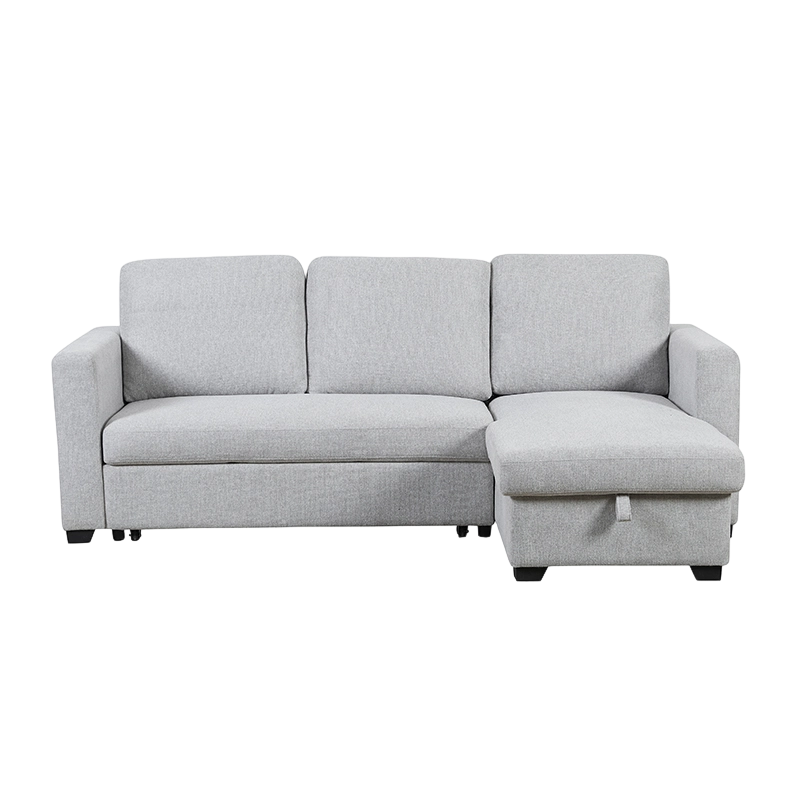
Combines everyday seating with a pull-out or fold-down sleeping surface for guests or smaller homes where a dedicated guest room isn't practical. Mattress thickness and mechanism quality vary significantly between models, so it's worth testing the fold-out action in person or checking reviews specifically about the sleeping mechanism before buying.
Corner Sofa with Storage
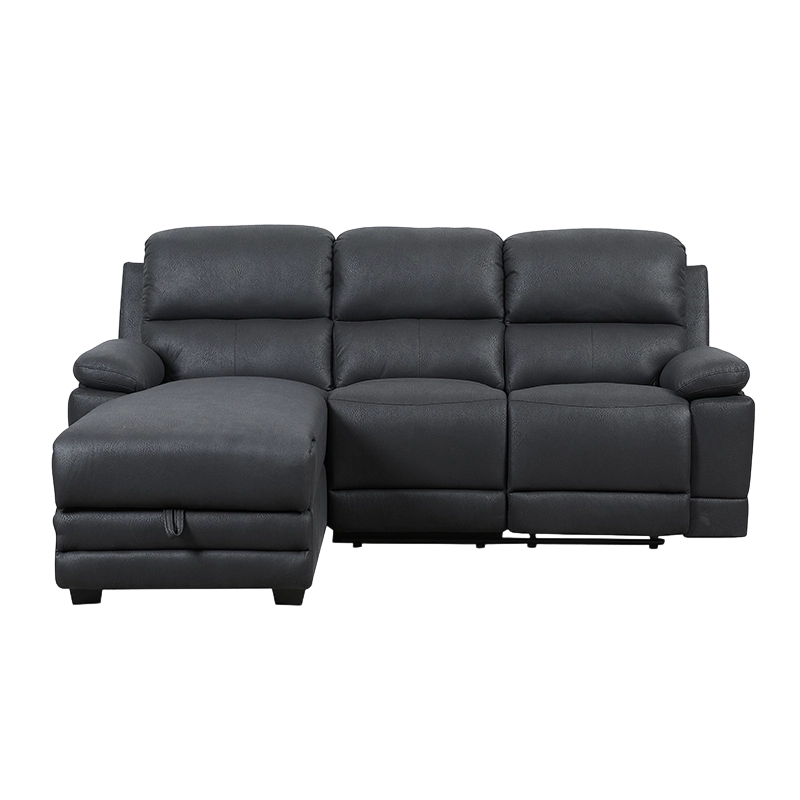
Built-in storage under the chaise section is useful for blankets, cushions, or general living room clutter, and can meaningfully reduce the need for separate storage furniture in smaller rooms. Check the lid mechanism — gas-assisted lifts are easier to operate one-handed than lids that require lifting the full cushion weight.
These features add practicality but also add weight, cost, and mechanical parts, so it's worth confirming the sofa bed mechanism and storage lid are sturdy and easy to operate before purchasing, especially if either feature will see frequent use rather than occasional use.
08Fabric vs. Leather Corner Sofa
| Factor | Fabric Corner Sofa | Leather Corner Sofa |
|---|---|---|
| Comfort | Softer feel, warmer in cold weather | Cooler to the touch, can feel sticky in heat |
| Maintenance | Vacuuming and occasional professional cleaning | Easy wipe-down, more resistant to spills |
| Durability with pets/kids | Can show wear, snags, or stains over time | More resistant to scratches and stains |
| Cost | Wide range, generally more budget-friendly options | Typically higher cost for genuine leather |
Comparison of fabric and leather corner sofa upholstery.
Within each category there's also a range worth understanding. Performance fabrics — often labeled stain-resistant or pet-friendly — trade a small amount of softness for significantly better durability. Within leather, top-grain and full-grain leather age better and develop a natural patina over time, while bonded or faux leather is more budget-friendly but tends to crack or peel sooner, particularly in high-contact areas like armrests.
09Frame Construction and Cushion Fill
The frame and cushion fill matter as much as the upholstery for how a corner sofa performs over years of use, even though they're less visible at the point of purchase.
Frame Materials
Kiln-dried hardwood frames resist warping and hold joints better over time than softwood or particleboard frames. Corner joints reinforced with dowels, screws, and glue (rather than just staples) hold up significantly better under the repeated weight-shifting a corner sofa experiences.
Cushion Fill
High-density foam holds its shape longest and suits daily, heavy use. Foam wrapped in down or fiber blend adds a softer feel while retaining more support than pure down. Pure down or feather fill feels the most luxurious but requires regular fluffing and loses shape fastest.
10Corner Sofa Care and Maintenance
- Vacuum regularly using an upholstery attachment to prevent dust and debris from working into the fabric weave.
- Rotate and fluff cushions periodically so wear and compression happen evenly across the seat.
- Address spills immediately, blotting rather than rubbing, and check the manufacturer's cleaning code before using any cleaning product.
- Keep leather conditioned every few months to prevent drying, cracking, or fading, especially in sun-exposed rooms.
- Avoid direct sunlight on fabric or leather where possible, since UV exposure is one of the leading causes of premature fading.
11Common Corner Sofa Buying Mistakes
What to Watch For
- Ordering the wrong orientation without taping out the footprint in the actual room first.
- Underestimating delivery access — doorways, hallway turns, and stairwells can all block delivery of an assembled piece.
- Choosing fabric based on showroom lighting alone, which can shift how a color appears at home.
- Skipping the frame and fill details and buying on style and price without checking construction quality.
- Overbuying size for the room, leaving too little space to walk or open doors comfortably.
12Final Buying Checklist
Working through orientation, size, material, and construction quality before browsing styles is what keeps a corner sofa purchase from turning into a costly return or a piece that never quite fits the room. Measure twice, test the fabric and cushions in person if possible, and confirm delivery logistics before finalizing your order.
LET'S TALK

Bai Shuiwan Industrial Park, Tian Huangping Town, Anji County, Huzhou City, Zhejiang Province, China
More About Us 
-
+86 18257273741
-
[email protected]
CONTACT US
Copyright © Anji Xuanbo Household Co., Ltd. All Rights Reserved.
Custom Modern Upholstered Sofa Manufacturers


