Focus on the manufacturing and export of functional sofas
-
 +86 18257273741
-
 [email protected]

 English
 Español
Industry News
 Home / News / Industry News / Leather Lift Recliner, Lift Up Recliner Chair & Swivel Lift Chair Guide
 Leather Lift Recliner, Lift Up Recliner Chair & Swivel Lift Chair Guide
 2026.04.30
 Industry News
Content
- 1 Understanding the Lift Chair Category
- 2 Leather Lift Recliner: Material, Durability, and Style Considerations
- 3 Lift Up Recliner Chair: Reclining Positions and Mechanism Types
- 4 Swivel Lift Chair: When Rotation Adds Real Value
- 5 Weight Capacity, Sizing, and Fit
- 6 Features, Controls, and Long-Term Reliability
Understanding the Lift Chair Category
Lift chairs are powered reclining chairs fitted with a motor-driven mechanism that tilts the entire seat forward and upward, assisting the user to a near-standing position without relying solely on leg or arm strength. They are primarily used by older adults, post-surgical patients, and people managing mobility-limiting conditions such as arthritis, Parkinson's disease, or hip replacements—but the category has expanded well beyond medical use into mainstream living room furniture as the mechanisms have become quieter, more reliable, and available in a wider range of styles and upholstery options.
Three distinct product types dominate the current market: the leather lift recliner, which prioritizes aesthetics and durability in a traditional recliner silhouette; the lift up recliner chair, a broader category term covering fabric and leather options across multiple reclining positions; and the swivel lift chair, which adds horizontal rotation to the standard lift mechanism for greater positional flexibility. Each addresses a different combination of user needs, room layout requirements, and budget expectations.
Leather Lift Recliner: Material, Durability, and Style Considerations
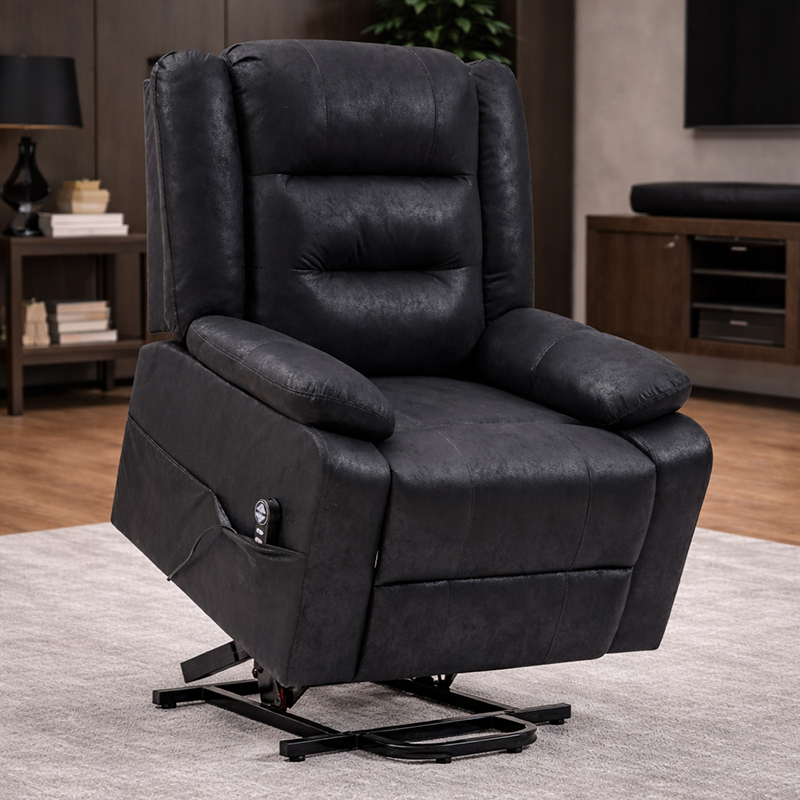
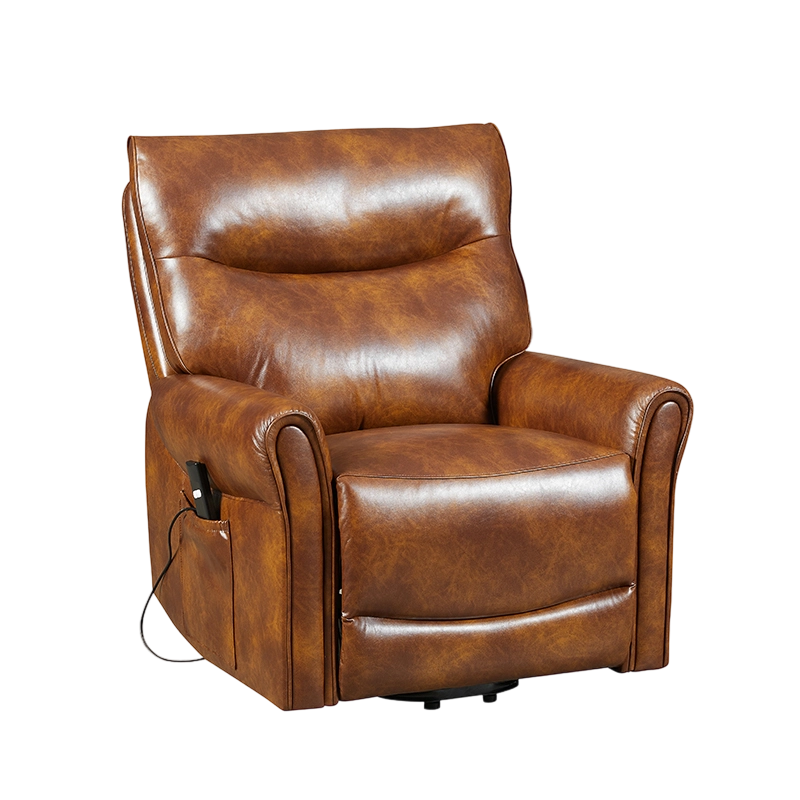
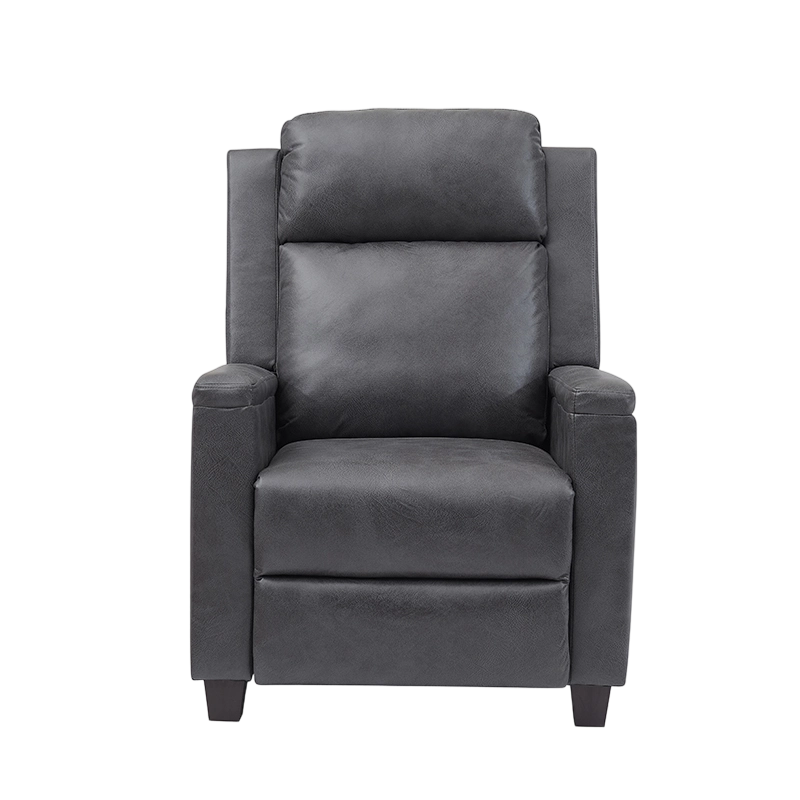
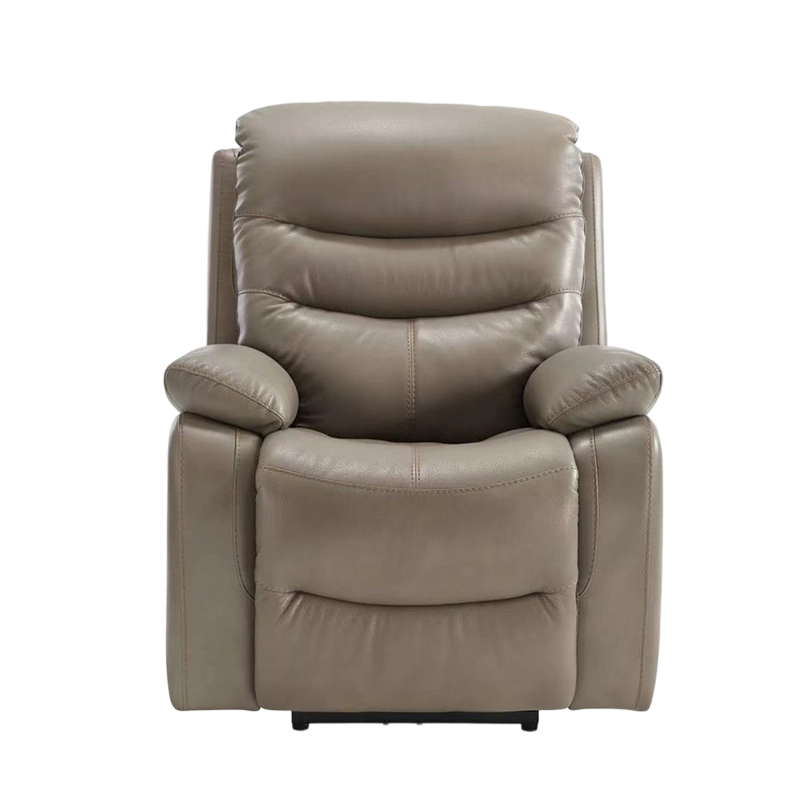
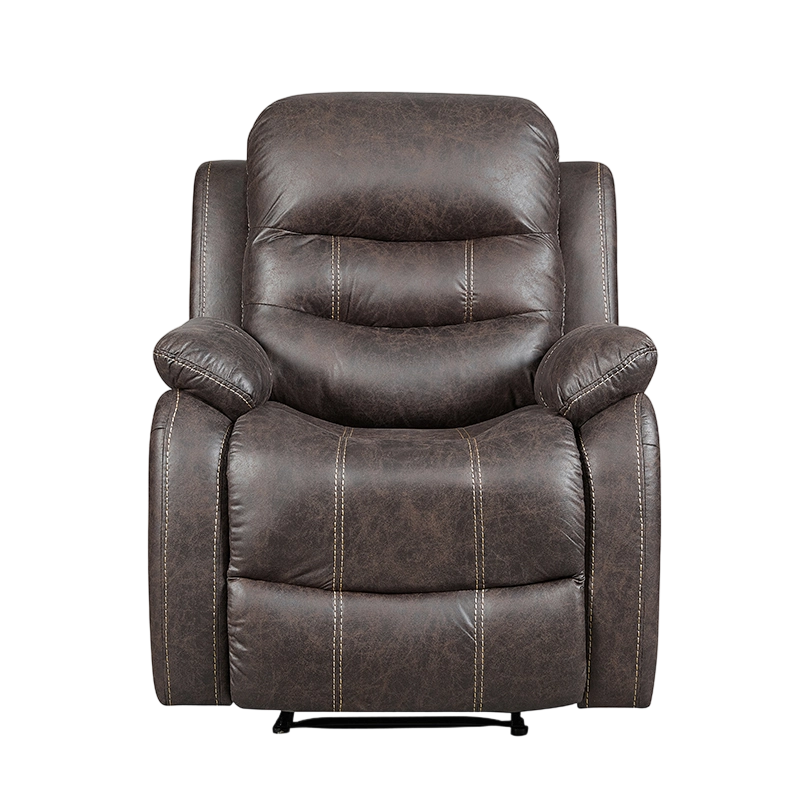
A leather lift recliner combines the powered lift-and-recline mechanism with genuine leather, bonded leather, or PU leather upholstery. The choice of leather type significantly affects both the long-term experience and the total cost of ownership.
Genuine Leather vs. Bonded Leather vs. PU
Genuine top-grain or full-grain leather is breathable, develops a patina over time, and can last 15–20 years with basic conditioning. It is the most expensive option and typically found on mid-to-high-end lift recliners priced from $1,200 upward. Bonded leather—composed of leather scraps adhered to a fiber backing—costs significantly less but is prone to peeling and cracking within 3–5 years, particularly at seat edges and armrests where flexing is greatest. PU (polyurethane) leather has largely displaced bonded leather in the budget segment; it resists peeling better than bonded leather, is easier to wipe clean, and is the most common upholstery on leather-look lift chairs priced between $500 and $1,000. It does not breathe as well as genuine leather and may feel warmer during extended sitting.
Why Leather Works Well in a Lift Chair Context
Smooth leather and PU surfaces are easier to slide across when using the lift mechanism to transition from seated to standing—fabric upholstery can create more friction against clothing, making the assist feel less fluid. Leather is also straightforward to wipe clean, which matters in households where the chair is used by someone with limited mobility who may spend extended periods in the seat. The visual weight of a leather recliner tends to read as conventional living room furniture rather than medical equipment, which is a meaningful consideration for many buyers.
Heat and Massage Integration
Many leather lift recliners in the $800–$1,500 range include built-in lumbar heat and vibration massage as standard or optional features. These functions are controlled via the same wired or wireless handset that operates the lift mechanism. Heat elements embedded beneath leather upholstery warm up more slowly than those under fabric but retain heat longer—relevant for users managing chronic back or joint pain who use heat therapy regularly.
Lift Up Recliner Chair: Reclining Positions and Mechanism Types
The term lift up recliner chair describes any powered recliner with an integrated lift mechanism, regardless of upholstery. The reclining mechanism itself—specifically how many positions it supports—is the most important functional variable to evaluate.
Two-Position
A two-position lift chair moves between upright and a single partially reclined position—typically 45 degrees. The footrest extends but the back does not recline far enough for sleeping. These are the most compact and least expensive lift chairs, suitable for users who primarily need the standing-assist function and do not require a full recline for rest or napping. They are a poor fit for users who spend long hours in the chair, as the limited recline creates pressure on the lower back over time.
Three-Position
The three-position mechanism adds a TV-watching recline position (approximately 90–120 degrees) between upright and a full recline of around 135 degrees. This is the most widely sold lift recliner type and covers the needs of most users who want a combination of upright sitting, comfortable TV viewing, and a relaxed recline for napping. The back and footrest move in tandem rather than independently.
Infinite Position (Zero-Gravity)
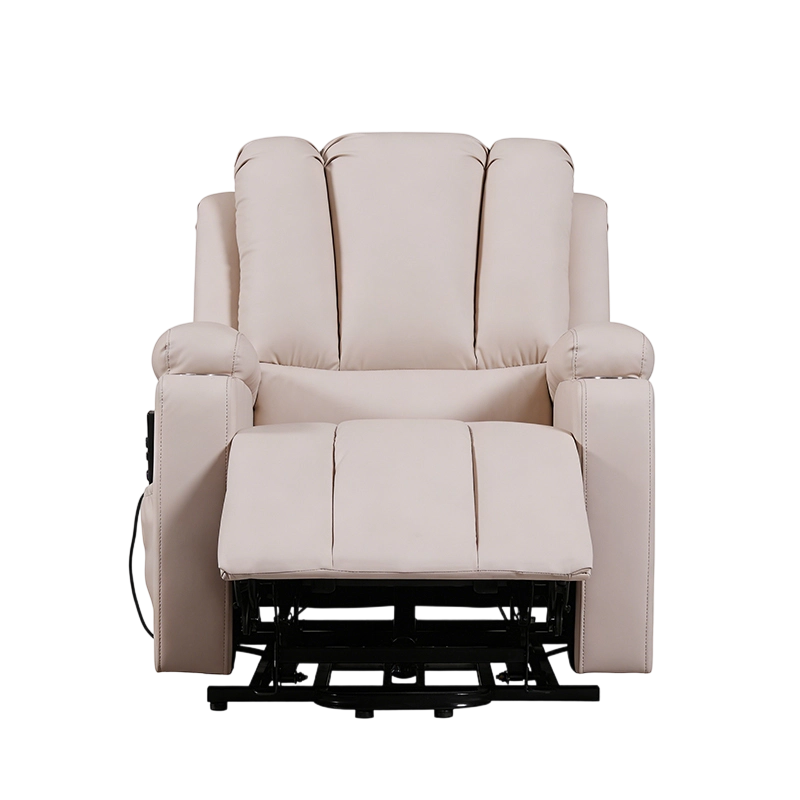
Infinite-position lift chairs use two independent motors—one for the back, one for the footrest—allowing the user to stop at any angle rather than cycling through preset positions. This enables the zero-gravity position (legs elevated above heart level, back reclined to approximately 120–130 degrees) that reduces spinal compression and lower-limb edema. At full recline, the chair lies nearly flat, functioning as a sleeping surface. These chairs are larger, heavier, and more expensive (typically $900–$2,500) but are the appropriate choice for users who spend significant time in the chair during the day or sleep in it overnight due to respiratory or cardiovascular conditions.
| Mechanism Type | Max Recline | Independent Back/Foot | Sleepable | Typical Price Range |
|---|---|---|---|---|
| Two-Position | ~45° | No | No | $400–$700 |
| Three-Position | ~135° | No | No | $600–$1,200 |
| Infinite Position | ~175° | Yes | Yes | $900–$2,500 |
Swivel Lift Chair: When Rotation Adds Real Value
A swivel lift chair adds a 360-degree (or limited-arc) horizontal rotation function to the standard lift-and-recline mechanism. This is a smaller product category than standard lift recliners, but it addresses specific functional needs that fixed-base chairs cannot meet.
Who Benefits from Swivel Functionality
The primary beneficiaries are users who need to reorient toward different areas of a room without standing—for example, turning from a television to a conversation area, or rotating to face a side table for meals and activities. For users with limited trunk rotation due to spinal conditions or post-surgical restrictions, swiveling the chair rather than twisting the torso is not merely convenient but necessary. Caregivers also benefit: rotating the chair to face outward makes transfers to and from wheelchairs, beds, or commodes significantly easier than maneuvering around a fixed-base chair.
Mechanism Design and Stability Considerations
In most swivel lift chairs, the swivel bearing sits between the lift base and the seat frame. The lift mechanism must be locked or in the upright position before the swivel function engages—attempting to swivel while partially reclined or while the lift is raising would create an unstable lateral force. Better-designed models interlock these functions electronically so the swivel is disabled unless the chair is in the upright seated position. Buyers should verify this interlock is present; cheaper designs rely on the user to manage the sequence manually.
The swivel bearing adds weight and height to the chair's base, which can be a consideration in rooms with low clearance under furniture or where floor-to-seat height is already at the upper limit of comfort for the user. Seat height on swivel lift chairs averages 19–22 inches from the floor in the seated position, slightly higher than standard fixed-base lift recliners at 17–20 inches.
Wall Clearance Requirements
Swivel lift chairs are almost universally wall-hugger designs, meaning the seat slides forward as the back reclines, reducing the clearance needed behind the chair. A standard wall-hugger lift recliner requires 4–6 inches from the wall; swivel models typically need the same, though the swivel range should be checked against room geometry—a chair with full 360-degree rotation placed close to a side wall will be blocked from completing a full rotation in that direction.
Weight Capacity, Sizing, and Fit
Correct sizing is as important as mechanism selection. A chair sized incorrectly for the user's body dimensions will deliver poor postural support regardless of its other features, and operating a lift chair beyond its rated weight capacity stresses the motor, gearbox, and frame in ways that accelerate failure and void warranties.
Standard lift recliners are typically rated for users up to 300–350 lbs (136–159 kg) and fit users of average height (5'3"–5'10"). Heavy-duty and bariatric models extend weight ratings to 500–700 lbs (227–318 kg) with wider seats (typically 23–28 inches seat width versus the standard 20–22 inches) and reinforced motor assemblies using dual motors in the lift mechanism. Petite models with seat heights of 15–17 inches are available for users under 5'2", preventing the foot-dangling posture that occurs when a standard chair's seat is too deep or high for a smaller frame.
Seat depth is the measurement most frequently overlooked. Correct seat depth positions the user's back against the lumbar support with 2–3 inches of clearance behind the knees. Too deep a seat forces the user to perch forward, negating lumbar support and making the lift assist less effective; too shallow causes pressure on the back of the thighs. Most manufacturers list seat depth in product specifications—matching this to the user's measured thigh length (seat to back of knee) is a straightforward step that significantly improves long-term comfort.
Features, Controls, and Long-Term Reliability
Beyond the core lift and recline function, several features separate chairs suited to long-term daily use from those adequate only for occasional assistance.
- Battery backup: A built-in battery backup allows the chair to return to the upright position during a power outage—essential for users who cannot exit the chair without the lift function. This feature is absent on many budget models and should be considered non-negotiable for users with significant mobility limitations.
- Handset design: Wired handsets with large, clearly labeled buttons are easier to use for people with reduced hand dexterity than compact wireless remotes. Backlit buttons matter for nighttime use. Some models offer both wired and wireless control.
- Side pocket and USB charging: A built-in side pocket for the remote, phone, and reading material reduces the need to reach and lean, which is a fall risk for many lift chair users. USB charging ports integrated into the chair frame are a practical addition for users who use the chair as a primary daytime seating position.
- Motor noise: Motor noise during operation ranges from near-silent on premium models to audible humming on budget units. For users who use the chair in shared living spaces or who operate it during nighttime hours, motor noise is worth evaluating in person or through verified reviews before purchase.
- Warranty coverage: A meaningful warranty for a lift chair covers the motor and mechanism for a minimum of 3 years and the frame for 5 years or more. One-year warranties on the mechanism are common on entry-level models and reflect the expected service life of the components used. Motors are the highest-cost repair item; a short motor warranty on a heavily used chair is a significant financial risk.
LET'S TALK

Bai Shuiwan Industrial Park, Tian Huangping Town, Anji County, Huzhou City, Zhejiang Province, China
More About Us 
-
+86 18257273741
-
[email protected]
CONTACT US
Copyright © Anji Xuanbo Household Co., Ltd. All Rights Reserved.
Custom Modern Upholstered Sofa Manufacturers


